
Why India Needs To Improve Elderly Care Access
India is greying fast; the support system is yet to catch up
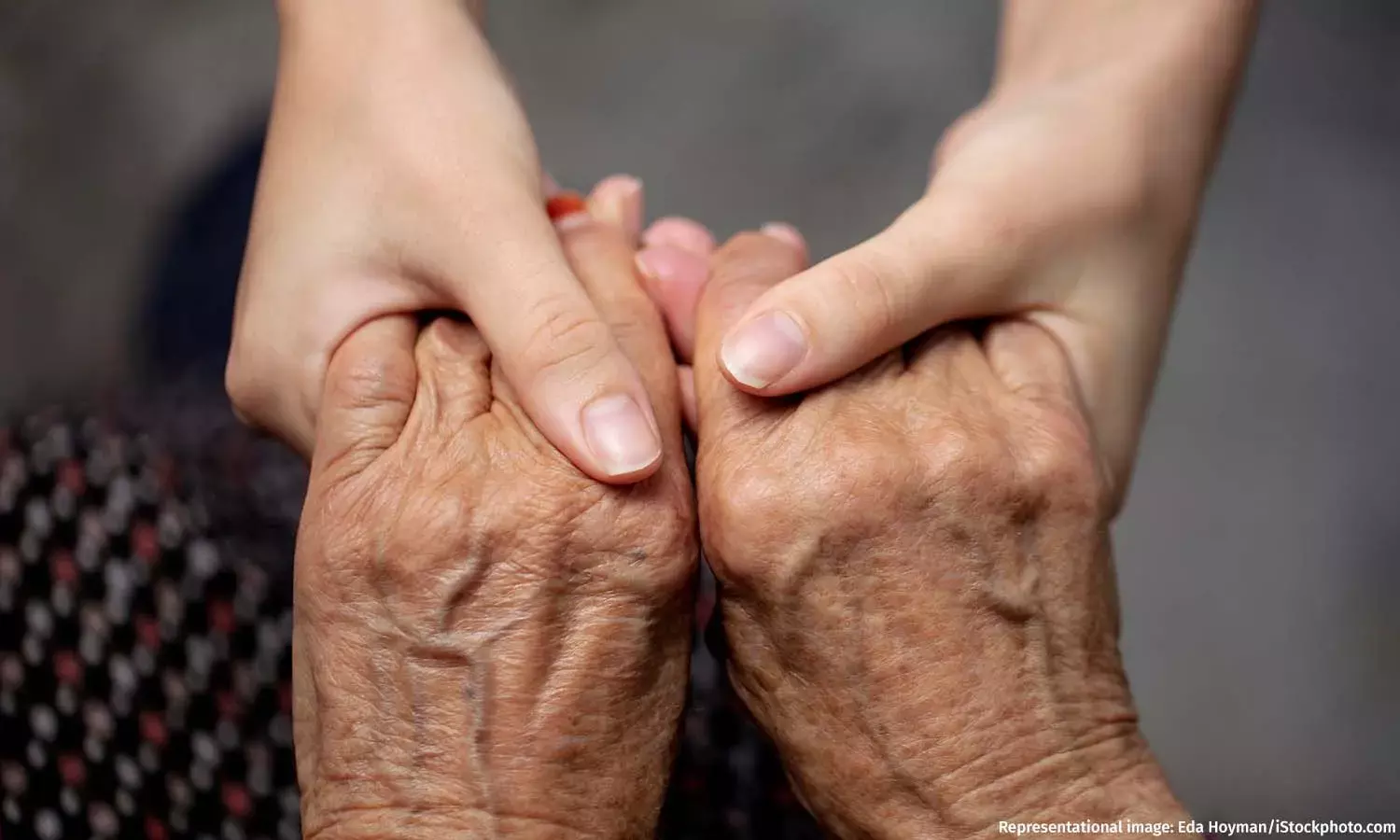
Kachchh: India is ageing fast. The population aged 60 and above in the country is projected to more than double from 100 million in 2011 to 230 million in 2036. By last year, the elderly made up 11% of the country’s population; with improvements in life expectancy and falling fertility, there will be more elderly than children in India by 2050, as we reported in March 2024.
Is India prepared to cater to the needs of her growing elderly population? Not quite, experts say.
In this first of a two-part series, we examine how fast India is ageing and whether the country is prepared. We look at gaps in infrastructure—from old age homes to home-care services—and the lack of regulation and accountability in an unorganised but rapidly growing sector.
A 2024 NITI Aayog report said that the senior care system faces many challenges “due to the lack of a comprehensive, integrated policy for care and support”. There are infrastructure- and capacity-gaps “for supporting the health and welfare of the elderly, evidence-based knowledge repositories for geriatric illness management, enabling frameworks and monitoring mechanisms, and emergency response systems”, it said.
The Ministry of Social Justice and Empowerment, the nodal ministry that looks after the welfare of the elderly population in the country, spearheads several schemes and programmes aimed at addressing the different challenges faced by the elderly. Some key initiatives include the Atal Pension Yojana (APY), Rashtriya Vayoshri Yojana (which provides assisted living devices), and schemes that address their livelihood needs.
And in her budget announcement this year, India’s finance minister Nirmala Sitharaman addressed geriatric care whilst talking about reforms in the health sector, adding that in the coming year, 150,000 multi-skilled caregivers will be trained.
On ground, however, elderly care specialist Pankaj Mehrotra feels that the welfare needs of the elderly have hardly been met in the country, “apart from three-four states, like Kerala”. “Housing and welfare are state subjects, so the nodal ministry can recommend a lot of things but it is on the state to take it further,” Mehrotra said.
We have a long way to go, said Gitali Thakur, social entrepreneur and CEO of AgeWell Care, which provides home-based care for the elderly.
Gaps in infrastructure
There are 696 senior-citizen homes across the country supported by the government; an additional 84 have been selected to be supported for the financial year 2025-26. The government does not keep information on private senior citizen facilities or old age homes. This, said Mehrotra, is a big gap.
A study by Tata Trusts, Samarth and United Nations Population Fund (UNFPA) said that not only do senior living facilities run by private organisations “address the needs of a fraction”, “there is no way of evaluating the quality and appropriateness of the services”. It leaves the elderly residents of these homes vulnerable, and offers no incentives to the facility owners and managers to improve, it goes on to add.
“Many old age homes are unregistered and unregulated,” Mehrotra added, “The government has a framework for senior care homes but these are just guidelines and states have to develop their own Standard Operating Procedure, which not every state has done. The central framework itself is not at par with other developed countries.”
The Tata Trusts study also added that the number of old age homes in India is grossly inadequate. It looked at a sample set of more than 480 old age homes and more than 60 senior living facilities in 84 locations. “[The study] projected the sample set to countrywide population data extracted from 2011 census of India, and arrived at an estimate of around 1,150 facilities and the capacity to house around 97,000 elderly residents,” it said. Forecasting likely demand driven by increasing elderly population, the study said that there is a “crying need to enhance the capacity almost eight to ten-fold over the next decade”.
Missing accountability
But it’s not just living facilities that there is a gap in. Home-care services—in which chronically ill patients or those recovering, are provided care at their home—is also much in demand, as we will see in the second part of this series.
Sixty-five-year-old Elina Ghosh, lives alone in Delhi. Her husband died three years ago and her daughter works and lives in a different country. “I have been recently diagnosed with Parkinson’s disease,” Ghosh, who retired as a school teacher, said. “Shraboni, my daughter, has therefore been very worried about me living alone. After a lot of deliberations, we decided to hire a home-based caregiver.”
While their journey has only begun, Ghosh worries about the quality of services once her disease progresses. Her aunt in Jabalpur, paralysed after a recent stroke, has struggled to find trained, reliable caregivers.
Kolkata-based geriatric specialist Antarikhya Bordoloi agreed with Ghosh’s observation. “There are now a number of private organisations offering home-based care services for the elderly, but most of them are either not well trained or well managed,” she said.
The biggest problem here, she pointed out, was accountability. “Southern India is a little ahead in geriatric healthcare as compared to other parts of India. Most of the time, the primary objective of these caregiver service providers is to earn money on a long term basis from families who are dependent on caretakers because they live in a different state or country,” she said.
Thakur, whose organisation trains caregivers and provides services, added that while there are now professional courses available, there is no standardisation. “This is an unregulated, unorganised sector,” she said. It is a sector that is, however, growing fast.
Growing silver economy
As India’s elderly population grows with increasing life expectancy—currently 72—so are opportunities to invest in the sector. According to the government, India’s silver economy, driven by goods and services aimed at the elderly, is valued at approximately Rs 73,000 crore as of 2024, with projections indicating manifold growth over the years.
“The elderly care sector is metro-centric and accessible to few,” Thakur said, “Seventy percent of the elderly population live in rural areas. To address this, I feel we need more community-level initiatives.”
An example is the community-based palliative care model in Kerala. In this, local volunteers—shopkeepers, teachers, students—are trained to provide not just basic medical support, but also companionship and emotional support to those with serious illnesses.
But scaling such models has proven difficult. Kerala's network developed over decades, supported by high literacy rates, strong local governance, and civil society engagement—conditions not easily replicated in other states
“Ageing is not yet recognised as an issue that needs to be worked on—neither at the policy level, nor at the political level—which is why the healthcare system does not focus much on elderly care,” Thakur says. “Private sector initiatives are few and expensive and therefore not accessible to all.”
IndiaSpend reached out to the social justice and empowerment ministry for comment. We will update this story when we receive a response.
This is the first of a two-part series. In the second part, we will examine how limited home-based palliative care pushes families toward hospitals.
We welcome feedback. Please write to respond@indiaspend.org. We reserve the right to edit responses for language and grammar.