
Elder Care Was Meant To Reach Homes. In Most Of India, It Hasn't.
As India’s elder care policies emphasise care at home, parliamentary data show that services often fall short, shifting the burden to hospitals, families and unpaid caregivers.
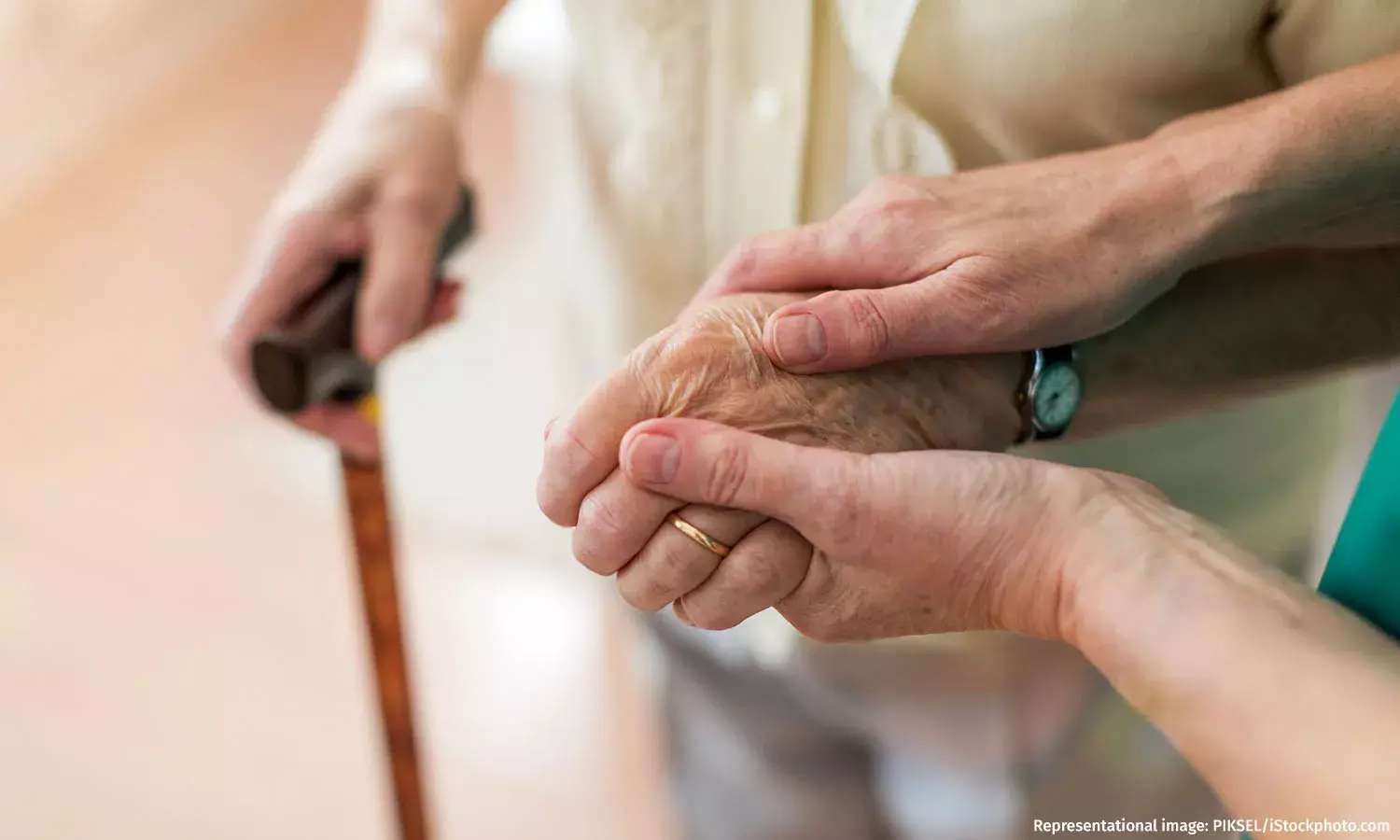
Mumbai: India’s increasing demographic of the elderly needs long-term care, daily support and palliative services. While national policies emphasise care at home, government data show that access to such services remains limited.
With older adults projected to account for nearly 20% of India’s population by 2050, as we reported in March 2024, the gap between policy intent and care on the ground means many older adults are dependent on hospitals or family support.
As India ages, national policy increasingly positions home-based palliative and elder care as a way to reduce suffering and avoid unnecessary hospitalisation. Our reporting suggests these services reach only a limited share of older adults.
In this concluding story of a two-part series, we explain how gaps between policy design and delivery shape where care is provided, how households absorb costs, and who bears responsibility when care does not reach home. You can read the first part here.
Bringing care closer to home (on paper)
Home-based palliative care is a core component of India’s elder care framework, designed to reduce suffering among older adults with chronic and life-limiting conditions by providing care where people live.
Under the National Programme for Palliative Care (NPPC), states are expected to plan and fund services through the National Health Mission. The programme envisions trained primary healthcare workers delivering symptom management, basic nursing care and caregiver support through periodic home visits, with referral links to higher health facilities when required.
In principle, this model moves care away from hospitals and towards communities. On paper, the architecture exists for care to reach homes.
But a health ministry response in parliament in December 2025 suggests the reach of home-based palliative care remains limited. Kerala, where community-based palliative care has evolved over decades, reported around 650,000 home visits in eight months to October 2025. Maharashtra recorded about 167,000 visits. In contrast, Uttar Pradesh reported about 42,500 visits across a fraction of its districts, while Bihar delivered services in only six districts.
UP and Bihar are also among India’s youngest states by population, but also being among the most populous, the care is not proportionate to needs.
Because these figures capture service delivery rather than need, they point to wide variation in access to home-based palliative care across states. By contrast, a 2024 nationally representative study found that 12.2% of Indians aged 60 and above have supportive or palliative care needs. The share rises to about 16% in Uttar Pradesh and Bihar. Community surveys suggest that roughly two in every 1,000 people require home-based palliative care. These estimates far exceed the reported service volumes.
When sustained care is unavailable at home, families often turn to hospitals. Parliamentary data from recent years show high outpatient attendance among older adults in several states. The data provide no information on the reasons for these visits.
Interpreting these patterns, clinicians working in palliative care say that high outpatient numbers do not necessarily indicate better access. Shanmugapriya P., regional facilitator (Kerala) of Pallium India Trust, said persistently high OPD use often reflects unmanaged symptoms and the absence of home-based support.
“In many cases, OPD visits substitute for home care because families have no alternative,” she said.
When care does not reach homes, the burden shifts to families.
Drawing on fieldwork and research on palliative care, Parth Sharma, a public health and palliative care researcher at the Association for Socially Applicable Research (ASAR), said home care is often understood narrowly as medical treatment, while the wider needs of patients and households remain unaddressed.
“In reality, families don’t just need medicines or physiotherapy,” Sharma said. “They need support for mental health, nutrition, schooling and livelihoods.”
Without structured support, he said, households managing life-limiting illness often make difficult trade-offs, including children dropping out of school, reduced spending on nutrition, delayed treatment for other family members and mounting debt, pushing families into long-term vulnerability.
Gaps on the ground
Sharma said the central issue is not the absence of policy, but gaps in implementation. “Services exist on paper,” he said. “Their implementation is lagging.”
Programmes such as the National Programme for Palliative Care and comprehensive primary healthcare under Ayushman Arogya Mandirs are intended to also support people with life-limiting illness. In practice, Sharma said, they face familiar constraints seen across the health system, including limited funding, shortages of trained workers and weak monitoring.
As a result, he said, families are often left to manage care on their own, absorbing costs and responsibilities that public services were meant to shoulder.
When care does not reach homes, formal social safety nets for older adults offer limited fallback.
Elderline (14567), a national toll-free helpline operational since October 2021, is intended to provide information and field intervention for older adults and caregivers. Parliamentary data suggest that its response capacity remains uneven.
As of November 30, 2025, Uttar Pradesh attended to about 4,190 of the 28,643 calls it received, while Punjab responded to fewer than 3,000 of nearly 18,000 calls. Smaller states recorded fewer calls but handled a larger share. Overall, states with the highest call volumes also show large gaps between calls received and calls attended, suggesting that capacity, rather than need, shapes access.
Government-assisted old age homes form another pillar of formal support, but their scale remains small, as we reported in the first part of this series.
IndiaSpend reached out to the social justice and empowerment ministry for comment on the Elderline call-handling capacity by state, gaps in responses, government old-age homes, beneficiaries, and any expansion plans. We will update this story when we receive a response.
The hidden costs families carry
Private palliative care in India is largely delivered by non-profit trusts and small organisations, operating without mandatory national accreditation. Beyond hospital bills, families shoulder a range of financial burdens that remain largely invisible in official data.
Anuja Damani, additional professor of palliative medicine at Kasturba Medical College, Manipal, and director of EPEC-India, said that the most significant costs are often indirect and poorly recognised.
“These include loss of income when a family member stops working to provide care, repeated travel to hospitals, accommodation near health facilities, and daily expenses such as food,” she said.
When formal services thin out, responsibility shifts to families, falling disproportionately on women, as IndiaSpend reported in June 2025. Caregiving frequently requires women to reduce paid work hours or exit the workforce altogether, clinicians said, resulting in income loss that often exceeds direct medical expenses.
Damani said caregiving-related costs often extend far beyond medical bills, with women frequently absorbing prolonged periods of unpaid care work that is neither reflected in health records nor covered by insurance, contributing to income loss, burnout and long-term financial vulnerability.
Out-of-pocket spending continues even when families are nominally insured, she added. For those attempting care at home, costs quickly accumulate for nursing support, physiotherapy, medical equipment and oxygen, services that are largely unregulated and almost entirely self-financed.
Public insurance schemes provide limited relief from these pressures. Damani said programmes such as Ayushman Bharat–PMJAY have improved access to inpatient care but offer minimal and inconsistent coverage for palliative and end-of-life care, particularly outpatient, home-based services.
Although palliative care is formally included under insurance, it is poorly defined and inadequately packaged, leading to wide variation in how hospitals interpret coverage. Core elements such as symptom control, counselling, advance care planning and caregiver support, are rarely reimbursed.
“There is a significant gap between policy intent and real financial protection,” Damani said. The lack of integration between insurance, primary care and community-based palliative services, she added, means families continue to bear most costs even when they are officially insured.
IndiaSpend reached out to the National Health Authority (NHA), the implementing body for Ayushman Bharat–PMJAY, for comment on coverage for palliative, outpatient, and home-based care under the scheme. We will update this story when we receive a response.
Even where home-based palliative care exists, providers and families operate under heavy strain. In parts of Kerala, nurses involved in home-based care said workloads often exceed sustainable limits, with some attending 20-26 patients in a day, often without reliable transport.
What else is possible
In settings where care is organised around homes and communities, and backed by policy and staffing, families are less isolated and ageing is more likely to unfold with dignity.
In Japan, government-backed community care systems combine medical treatment, home-visiting nursing and social support, enabling many older adults to remain at home rather than defaulting to hospitals or institutions.
India, too, offers limited but instructive examples. In Kerala, long-standing community palliative care networks, supported by local governments and volunteers, help ease the burden on families managing serious illness at home. “In some parts of the country, like Kerala, the community steps in to support the family,” said Parth Sharma, adding that in much of India, access to structured palliative care remains limited, shaping comfort and dignity at the end of life.
Sharma says India’s health system remains oriented towards hospitals rather than homes, while medical education continues to prioritise tertiary care over long-term, community-based support.
“If all healthcare continues to be delivered from hospitals,” he said, “a major proportion of the elderly will remain without access to care.”
Series concluded. You can read the first part here.
We welcome feedback. Please write to respond@indiaspend.org. We reserve the right to edit responses for language and grammar.