
How Rare Disease Drugs Impoverish Indians
India has about 2.5 million people living with cancer and around 100 million people with rare diseases, many of whom require medicines that fall outside insurance coverage and price control
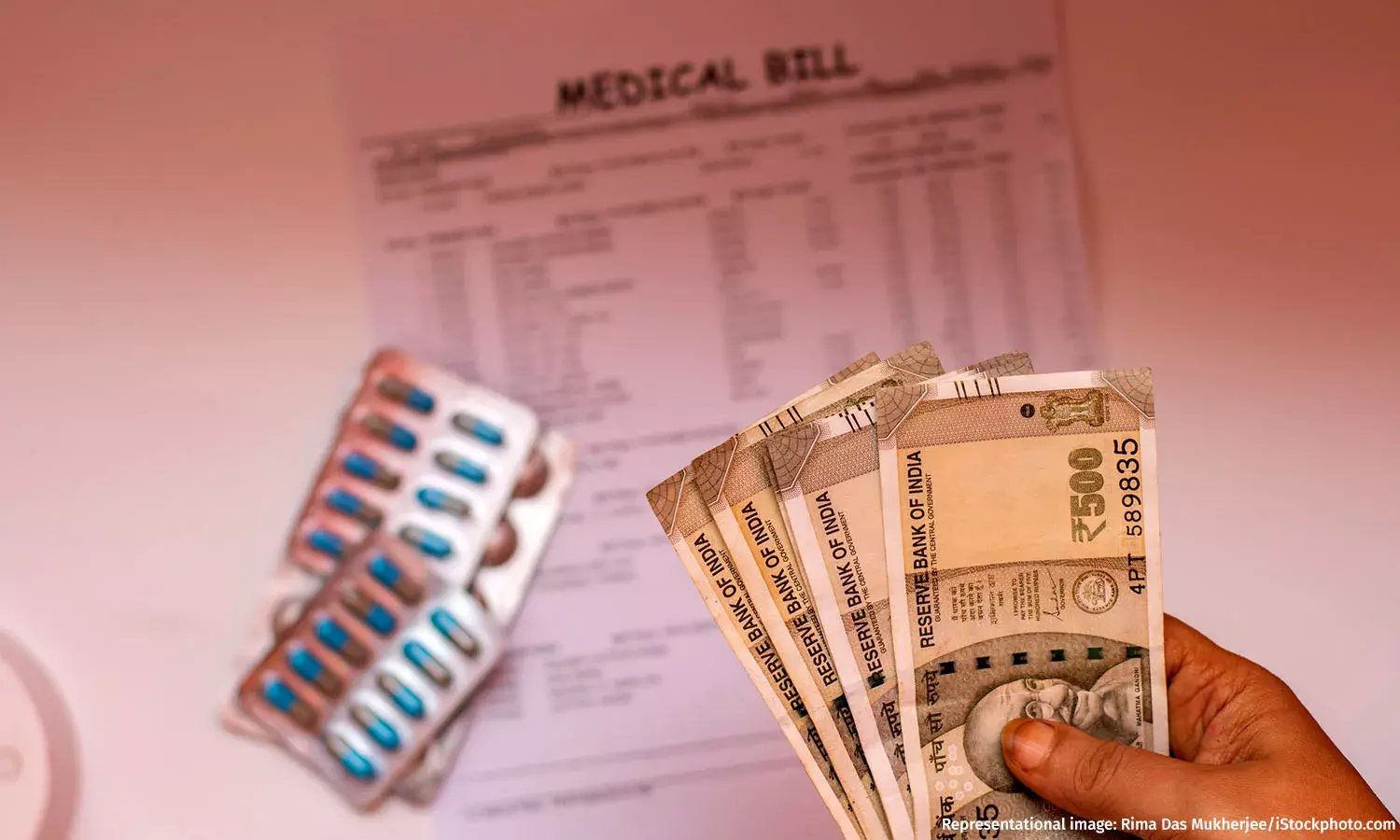
Mount Abu, Rajasthan: Sixty-two-year-old Kusum Devi (name changed to protect identity) developed sudden and severe lower back pain on the night of her daughter’s wedding. She was rushed to a nearby hospital in Surat, Gujarat. Eventually, investigations revealed that she had chronic lymphocytic leukaemia, blood cancer that needs life-long medication.
Neither the state health insurance scheme nor the Union government’s flagship Pradhan Mantri Jan Arogya Yojana (PMJAY) covers the medicine prescribed to treat her cancer. Acalabrutinib (100 mg) costs about Rs 8,500 for a month’s course, a sum she can ill afford.
The Indian Cancer Society (ICS) stepped in to support Kusum (up to Rs 5 lakh), as a result of which she is physically stable.
Government health insurance excludes many drugs and outpatient treatments. Drug price controls should fill this gap—but don't adequately address rare and specialised diseases, according to a report commissioned by the National Pharmaceutical Pricing Authority (NPPA), India’s drug price regulator.
Outlets under the Pradhan Mantri Bhartiya Janaushadhi Pariyojana (PMBJP)—aimed at facilitating the sale of centrally procured reasonably-priced generic medicines—stock about 2,110 medicines and 315 surgical items, including 384 medicines covered in the National List of Essential Medicines (NLEM 2022).
Essential medicines are “those that satisfy the priority health care needs, based on efficacy, safety, quality and total cost of the treatment,” and which are subject to price control measures detailed in the Drug Price Control Order 2013.
Certain drugs used to treat rare and complex cancers have not been included. Some examples are Nivolumab and Pembrolizumab, which are checkpoint inhibitors for melanoma, lung and other cancers; and Bevacizumab, an anti-angiogenic therapy for colorectal and lung cancers. While Bevacizumab costs about Rs 8,000 for a vial of 100 mg, the other drugs cost Rs 1-2 lakh for a vial (see here and here).
Beyond pharmaceuticals, medical devices present similar price control gaps. Some such as cardiac stents and knee joint replacements have designated ceiling prices under the Drug Prices Control Order 2013. Others are treated as non-scheduled items where NPPA monitors annual price increases but doesn't set ceilings.
This is the second of a two-part investigation into India's medicine affordability crisis. Part 1 examined why generic medicines—despite 17,000 Jan Aushadhi stores—don't reach the poorest citizens. This concluding part examines a different crisis: specialised medicines for cancer and rare diseases that fall outside generic frameworks entirely.
This affects millions of Indians. India has about 2.5 million people living with cancer. More than 700,000 people are diagnosed with cancer annually while about 550,000 lose their lives to the disease.
Cancer is one of the most expensive non-communicable diseases to treat, for which--various studies show--between 34% and 84% patients incur catastrophic expenditure rates, as IndiaSpend reported in August 2024.
The World Health Organization (WHO) defines catastrophic health spending as out-of-pocket payments that exceed 40% of a household’s capacity to pay for healthcare. The WHO defines capacity to pay for health care as total household consumption minus a standard amount to cover basic needs (food, housing and utilities).
Another 100 million Indians struggle to live with rare diseases, according to the Indian Organization for Rare Diseases—because they are hard to diagnose and expensive to treat. It can take up to five years to correctly diagnose a person with a rare disease, while proven treatments exist for only about 5% of rare diseases. And at a high price at that.
While the government offers a one-time Rs 50 lakh payout to patients for treatment, this is insufficient. Treating a rare disease can cost up to Rs 1 crore and more annually, by the government’s own admission.
Gaps in the drug pricing mechanism
In 2019, the NPPA invoked para 19 of the Drugs Prices Control Order 2013 to limit trade margins of select cancer medicines to 30%, a much needed move considering “margins on cancer medicine are sometimes as high as 90%,” said M.R. Rajagopal, chairman emeritus, Pallium India, and adjunct professor of global oncology, Queen's University, Canada.
This price capping was considered a pilot before extending it to other therapeutic segments but similar caps haven’t been applied.
India is majorly focusing on the NLEM for price control with the ceiling prices of scheduled drugs based on a simple average of market prices.
Non-scheduled drugs are subject to annual price increment limits, typically 10% of the maximum retail price (MRP), which must be reported in the prescribed forms. However, their base price isn’t fixed by the regulator; they are free to set the initial retail price when launching the product.
Overseas, many countries effectively regulate pharmacy margins and wholesale margins, according to the CCI report. This includes setting prices based on their price in a basket of other countries; on the price of generics or therapeutically similar drugs available domestically; on the value it delivers to patients, healthcare systems and society rather than just the production cost; or Health Technology Assessment (for new drugs and medical technologies) the way Australia, Brazil, Germany and others do. India does none of this.
“All these methods ensure that drug costs reflect both clinical benefit and public affordability,” said Kritika Krishnamurthy, director of the Bridge Policy Think Tank, the organisation behind the NPPA-commissioned review of drug pricing.
“Introducing such systematic approaches in India would create a more predictable and equitable framework for medicine prices, bridging the gap between patient access and industry sustainability,” she said.
IndiaSpend has approached Kumar Aman Bharti, director (Cost) in the NPPA, for reasons for the government approach to drug price setting. We will update this story when we receive a response.
Reimbursement mechanisms the need of the hour
“Government initiatives so far have worked but patients need much more financial support for cancer treatment which is a huge challenge,” said Usha Thorat, managing trustee and honorary secretary, Indian Cancer Society. “Government hospitalisation schemes cover only 40% of the population. But even middle class families not covered by such schemes are unable to afford cancer treatment.”
Reducing custom duties on cancer drugs in the budget 2026-27 is a welcome step for affordability, said Krishnamurthy. For emerging therapies such as cell and gene therapies, she suggested, the government should provide incentives such as capital subsidies, tax holidays, and technology transfer provisions “while ensuring pricing transparency through Health Technology Assessment and value-based frameworks”.
For rare diseases, Krishnamurthy said India should prioritise government reimbursement schemes alongside a technical committee to attract foreign manufacturers for local production.
In Australia or China, a Pharmaceutical Benefits Scheme and National Reimbursement Drug List respectively help to financially protect people, according to the Bridge Policy Think Tank’s report on drug pricing in India as against other nations.
“If supply-side price controls are limited, then public reimbursement mechanisms must expand to protect patients,” said Krishnamurthy. “Without one or the other, affordability challenges inevitably shift the burden to individuals.”
Price controls, however sophisticated, cannot help with medicines that exist and are included in NLEM but still don’t reach patients.
Medicine accessibility as big a concern
Narayani Soman (name changed to protect identity), aged 82, diabetic and hypertensive, survived a stroke. She could drag herself around and get some housework done with her one functional arm. However, her husband, 86 years old, diabetic and with chronic lung disease, was frail and almost completely bed-bound.
All the medicine they needed was available in their nearest primary health centre in rural Kerala. But it had to be picked up, which Narayani’s failing strength didn’t allow.
“Even in states where free medicines are available in the government system for the poor, the patient is often unable to access it,” said Rajagopal. “Availability in a hospital isn’t the same as accessibility to a patient, but health systems don’t recognise this difference.”
Morphine is a good example of a medicine that is included in the NLEM 2022, but which is often not accessible when needed.
In most of the Global North and in some low income countries like Uganda, morphine is considered the gold standard for pain relief in cancer patients; they use it legally, safely and effectively.
In India, Kerala has effectively used morphine for 27 years but in most of the country, “about a million people with advanced cancer need oral morphine to alleviate pain but despite sufficient morphine powder being made domestically, and morphine being categorised ‘essential’, it is inaccessible to more than 96% patients because of demand side and supply side issues,” said Rajagopal.
Between 1985 and 2014, the Narcotic Drugs and Psychotropic Substances Act made it challenging to prescribe morphine for pain relief and palliative care. An amendment to the Act in 2014 should have changed the situation but “the amended laws haven’t been widely implemented in a sustained way across states,” said Rajagopal. “USA’s very visible opioid epidemic is driving the implementation of the amendment; possibly because the condition of terminal cancer patients isn’t as visible.”
On the demand side, Rajagopal said, “generations of Indian doctors haven’t seen the use of morphine and tend to prescribe transdermal patches instead. But morphine is 100 times cheaper than a transdermal patch of fentanyl and most of the time equally effective and in some instances, more effective.”
Millions like Kusum—without NGO support, without reimbursement schemes, in the world's 'Pharmacy'—face the same impossible math: treatment or financial ruin.
We welcome feedback. Please write to respond@indiaspend.org. We reserve the right to edit responses for language and grammar.