
Why Air Pollution In The Northeast Needs Urgent Attention
While public discourse often remains fixed on the severe winter smog in Delhi-NCR, India’s Northeast is emerging as a critical pollution hotspot
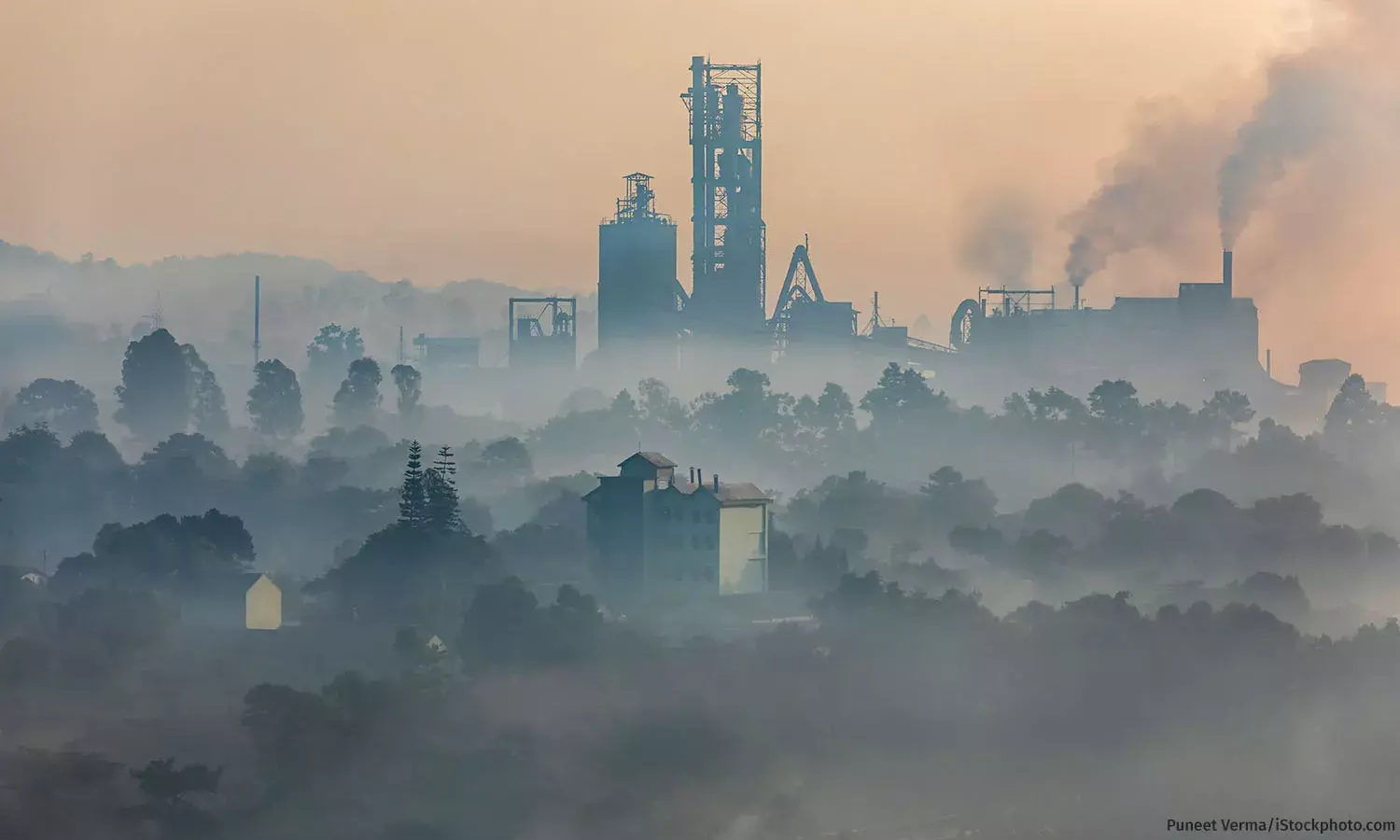
Morning in Shillong, Meghalaya
Mumbai: Winter air pollution in Delhi and the National Capital Region (NCR) caught the country’s attention as early as October. Just last week, the government revoked stage III of the graded action plan—targeted interventions at different levels of pollution.
The Northeast faces a similar crisis, but with far less public attention. States such as Assam and Tripura now have poor air quality for a large part of the year, and within the larger NE region, some cities have air quality indices as bad as their NCR counterparts. Cities such as Guwahati and Silchar have not been able to reduce their PM 10 concentrations and the city of Byrnihat, an industrial town on the border of Assam and Meghalaya, ranks as one of the most polluted places in the world.
Experts warn that air quality is a problem beyond the non-attainment cities targeted under India’s National Clean Air Programme (NCAP) and that India needs to look at airsheds instead of cities. While meteorological factors such as temperature and geographical factors such as hills and river banks help reveal the problem of polluted air, sources that contribute to this pollution year-round must be identified and addressed.
IndiaSpend wrote to the Union environment ministry, Central Pollution Control Board and the chief ministers of each state in the Northeast with detailed questions on what steps are being taken to control air pollution. We will update this story when we receive a response.
The hidden hotspot
India’s Northeast has been bestowed with some of the most dense forests in India and the hill states generally enjoy good air quality. In fact, the region is also home to Gangtok, the Indian city with the cleanest air in 2024.
But over the years, air quality in the larger Northeast region has become a cause for concern.
Air quality is categorised between good and severe based on ambient concentrations of pollutants and their likely health impacts. India measures pollutants such as particulate matter PM 10, PM 2.5, NO2, SO2 and others to determine an air quality index for a given place at a given time.
Particulate matter measuring less than 10 micrometre in diameter has the ability to penetrate deep into the respiratory system, as we explained in October 2023. Among these particles, those with a diameter of less than 2.5 micrometre, known as PM 2.5, pose the most significant health risk. PM 2.5 particles are capable of infiltrating the lungs and occasionally entering the bloodstream, resulting in serious health consequences.
India measures its air quality as per the National Ambient Air Quality Standards or NAAQS which are more lax than the standards recommended by the World Health Organisation.
Overall in India, PM 10 concentrations almost doubled from 1994-08 levels to 2009-19 levels due to various factors such as increased industrial and commercial activities, urbanisation, and changes in land use patterns.
The Northeast is no exception. For instance, a satellite-based assessment of air quality by the Centre for Research on Energy and Clean Air (CREA) found that in 2024, except in the monsoon months, every district in Tripura and Meghalaya exceeded the NAAQS for PM 2.5. Even in Nagaland, 11 of 12 districts exceeded the standards.
Along with Delhi and Punjab, the analysis pointed to Assam and Tripura (six of eight districts) as having high PM 2.5 levels even during the monsoon, “showing that meteorological relief alone is insufficient to overcome their substantial baseline emissions”.
Among India's 50 most polluted districts, Assam contributed 11—one-third of its total districts—while Delhi saw all its 11 districts in the list. Tripura had three, and Meghalaya and Nagaland had one each.
“We are still calling pollution in Northeast an ‘emerging concern’ but largely because monitoring in most places started only a few years ago,” said Manoj Kumar, analyst at CREA. “When monitoring began, we realised that many of these places show very high pollution levels, for example, Byrnihat.”
He stressed that meteorological factors, such as low temperatures in winter, only reveal the problem but air pollution is always there due to local emissions—and these sources of emissions should be addressed.
Sharad Gokhale, professor of environmental engineering at Indian Institute of Technology (IIT), Guwahati who has studied air quality for years and has also led studies on air pollution for NCAP, said that the government is taking various steps to improve air quality in the Northeast but the number of monitoring stations is still inadequate.
“The expansion of the monitoring network in the Northeast has begun recently with just three CAAQMS in Guwahati, one each in Silchar and Nagaon,” Gokhale said. “Many cities still have manual monitoring and so, real-time assessment is not possible. In Byrnihat, CAAQMS became operational only last year. Hotspots and rural areas in Assam still need monitoring stations and other states of NE have just one station per state.”
Monitored, measured, ignored
The evidence has been there for a while.
While underlining that Northeast India has good air quality in general, researchers from the Central Pollution Control Board and IIT Delhi found that in Guwahati, “Since 2014, PM 10 levels have consistently been elevated. In 2019, the recorded PM 10 value reached an unprecedented 205.4 µg/m3, nearly double the concentration observed in 2013.”
The authors pointed to industrial emissions, biofuel burning, vehicular emissions and dust uplifts from the alluvial plains along the river banks as local sources of particulate matter. “The topographical characteristics of the Brahmaputra River Valley exacerbates the entrapment of the emissions,” they stated in a 2024 paper.
In 2021, the Delhi-based Centre for Science and Environment (CSE) had also analysed air pollution in India and cautioned about the rising pollution in the Northeast.
“Signs of worsening air quality in this region has not drawn adequate public attention. Winter air quality in Guwahati can be almost as bad as what we see in NCR and UP cities. Smaller cities like Agartala and Kohima have begun to experience high pollution days,” CSE found.
An analysis by iForest had found that the average PM 2.5 concentration in Guwahati in 2023 was 53% higher than the prescribed NAAQS and PM 10 was 100% higher than permissible standards.
Gokhale shed light on some sources of emissions in the region.
“I have seen year-round deterioration of air quality in several cities of the Northeast. Some emerging cities have air quality as bad as Delhi at times. Guwahati in particular is seeing rapid infrastructure development. Construction dust, road dust, vehicular emissions, small factories, hills cutting, commercial cooking in open-air eateries and open waste burning are the primary sources of air pollution,” said Gokhale.
India launched a National Clean Air Programme in 2019 with an aim to improve air quality in 131 cities (non-attainment cities and Million Plus Cities) in 24 states by engaging all stakeholders. It targets a reduction in PM 10 levels up to 40% or achievement of national ambient air quality standards (60 µg/m3) by 2025-26 from the levels of 2019-20.
Cities such as Guwahati, Dimapur, Kohima, Agartala, Shillong, Byrnihat are part of the 131 cities covered under NCAP and receive grants from the Union government to improve air quality.
In December, Assam CM Himanta Biswa Sarma stated on X that PM 10 levels in Guwahati reduced from 119 µg/m3 to 103 µg/m3 in 2024-25, and attributed the improvement to targeted intervention in solid waste management, vehicle emission control and promotion of electric mobility.
On the other hand, the Union environment ministry told the Lok Sabha in December 2025 that by 2024-25, Guwahati had reduced its PM 10 concentrations by only 2.9% as compared to 2017-18 levels. The city of Nalbari in Assam had reduced it by only 2.3% and concentrations had worsened in Silchar by 10%.
On the upside, Kohima and Byrnihat reduced PM 10 concentrations by 44% in this period and even then, Byrnihat remains one of the most polluted cities in the world.
After IQAir tagged Byrnihat the most polluted city in the world in 2024, Meghalaya CM Conrad Sangma had issued a statement in 2025 that as per data generated from four manual ambient air quality monitoring stations of the state pollution control board, Byrnihat's average PM 2.5 concentration was 50.1 µg/m3 during 2024 and not 128.2 µg/m3 as claimed by the Swiss firm.
Kumar of CREA stated that the source apportionment study—which determines sources of air pollution in a region—for Byrnihat is still not publicly available. As for the other cities covered under NCAP, only 90 of 130 cities have completed source apportionment studies so far.
Calling for data availability, regional coordination and multi-stakeholder cooperation on the grave matter of air pollution, he said, “In a recent report, we analysed air quality across 4,041 towns and cities in India. Around 1,787 exceeded NAAQS. However, only 67 cities—about 4%—are covered under NCAP. This shows the need to shift from a city-based approach to a regional or airshed-based approach. Pollution is transboundary. Without regional coordination, cleaner air is not possible,” Manoj Kumar said.
(Ayman Khan, intern with IndiaSpend, contributed to this report)
We welcome feedback. Please write to respond@indiaspend.org. We reserve the right to edit responses for language and grammar.