
Interview: How A Potential Bird-Flu Pandemic Could Play Out
Gautam Menon, professor at Ashoka University, and his team modeled a potential H5N1 spillover in a poultry district. Their finding: Once the virus escapes farm workers' families, only lockdowns can stop it
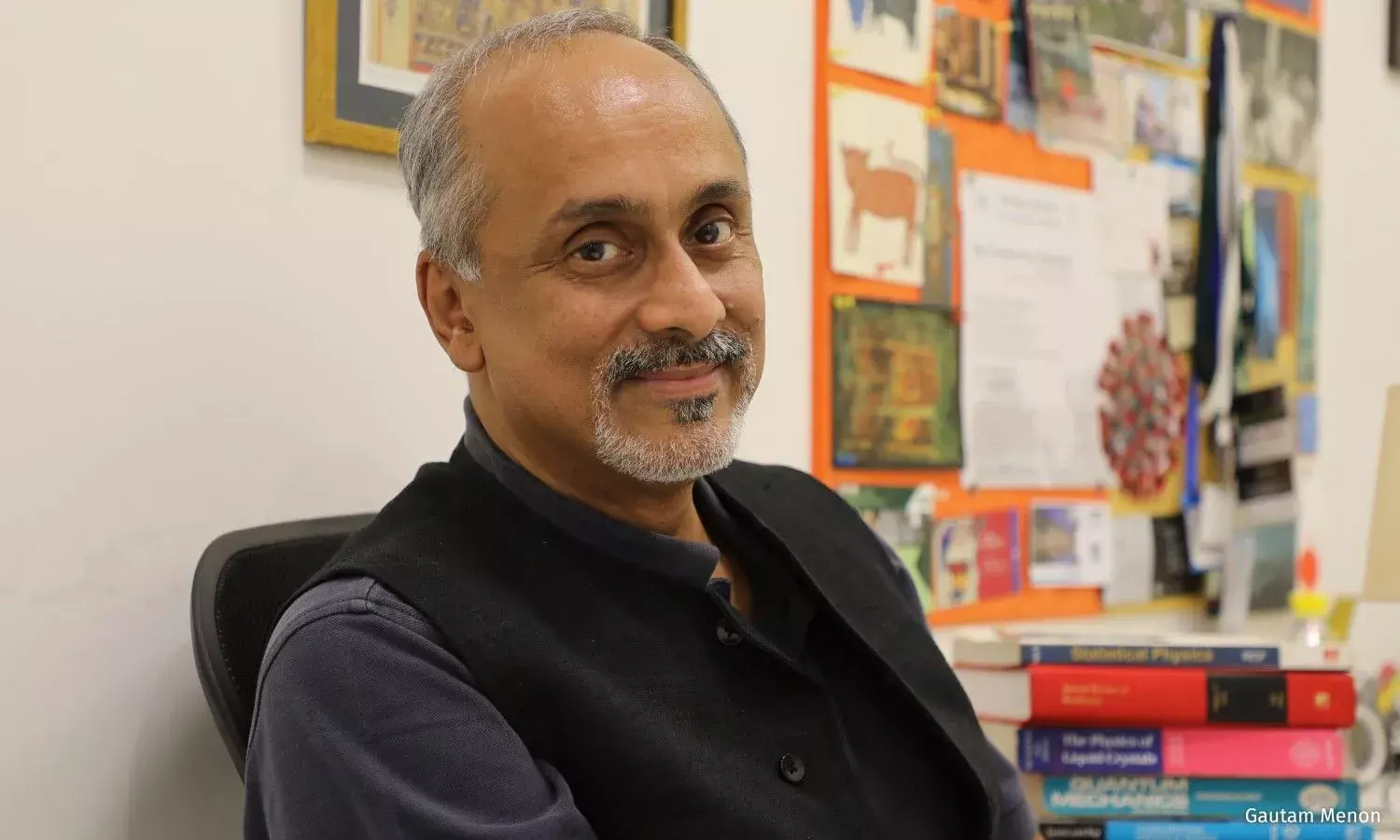
Hyderabad: The World Health Organization uses the term ‘Pathogen X’ to denote an unknown or unspecified pathogen that could cause a pandemic. Since 2018, the WHO has been steering efforts to detect and contain outbreaks, including ‘Disease X’. And when this disease does infect humans, the impact would depend on how quickly countries and communities can curb transmission.
Gautam Menon is Dean of research, and a professor of biology and physics at Ashoka University. Menon and his team used BharatSim, an ultra-large-scale agent-based simulation, to model a potential spillover and transmission of the H5N1 avian influenza, a bird flu. Considering a model for a village in Tamil Nadu with a population of just below 10,000 and a number of poultry farms, they studied the impact of three interventions—bird culling, quarantines and vaccinations—on the spread of the disease.
“Our most important conclusion was that timing is everything,” Menon explains. Beyond 10 cases, for instance, they found that the disease would have escaped the immediate circle of primary and secondary contacts, to expand far more unpredictably and uncontrollably—necessitating stringent measures such as lockdowns.
Menon serves on the Lancet Commission on “Strengthening the use of Epidemiological Modelling of Pandemic Diseases”, and heads Ashoka University’s Centre for Climate Change and Sustainability. In an interview, Menon discusses the findings of their study, and how India can prepare for a potential H5N1 pandemic.
Edited excerpts:
Why did you pick H5N1 for your study?
There is general consensus among those who study how infectious diseases originate and spread, that the next pandemic in humans is most likely to originate in a bird flu. These are types of influenza, called avian influenza and caused by the influenza A virus, that typically infect birds.
In general, viruses are species-specific, although there are exceptions. Viruses capable of infecting species that are very different from the original host must undergo a ‘spillover event’. Here, one or more mutations in the virus enable it to survive as well as adapt to the new host. Such spillovers are relatively rare. However, some bird flu viruses now seem to be able to also infect both land and sea mammals, having breached this species barrier.
Of the different types of bird flu that are especially important, H5N1 avian influenza is considered the most likely candidate for a spillover event. H5N1 is a prominent representative of a number of important avian influenzas with a high fatality rate. The technical name for this class of avian influenzas is Highly Pathogenic Avian Influenza (HPAI).
There are only isolated reports of H5N1 infections in humans, but no reports so far that indicate that such infections can pass sustainably from one person to another. If the H5N1 virus acquired the ability to do so, the spread of the disease could resemble that of the COVID-19 pandemic. It would be best to prepare for the worst, while hoping for something much milder.
Two barriers must be surmounted before an infectious disease in birds can translate into a disease with pandemic potential in humans. First, an H5N1 infection in birds should be able to ‘spillover’ into human beings, perhaps even via some intermediate animal. We know now that the first barrier can be partly breached: large mammals such as lions and tigers as well as sea mammals can be infected and can die from this infection. A report from early 2025 reports deaths of three tigers and a leopard at the Wildlife Rescue Centre in Nagpur, all from an H5N1 infection, likely caused from feeding on infected poultry.
Second, even if this virus could infect humans, it should also be able to pass between them in a manner that would lead to an exponential increase in the numbers of people infected with time. This is what we would call an epidemic if restricted to a local geographic region, and a pandemic if it expands beyond. The rate of this increase is related to what is called a Reproductive Ratio, an important number that characterises any epidemic.
We were interested in understanding how the potential epidemiology of H5N1 infections in humans could be inferred from the timeline of a small number of initial infections. We also wanted to be able to develop methods that could be used to understand what control measures might work and under what circumstances. The world’s fastest growing poultry markets are in South- and South-East Asia. We noted that there was very little work on a potential bird-flu pandemic in humans originating in low and middle-income countries in this region, especially using the types of detailed models we had spent some years developing. We wanted to address this gap.
Could you take us through your findings?
We used an ultra-large-scale agent-based simulation developed by my group at Ashoka University, in collaboration with ThoughtWorks, a global technology consulting company. BharatSim was intended initially to model COVID-19 spread and related interventions in Indian cities and states. As we realize now, it has much broader applications.
An agent-based model is the most granular and detailed of possible models for disease spread, since it treats every individual separately. An important part of BharatSim is its ‘synthetic’ population, in which every individual in a particular region is described in terms of attributes such as age, gender, income levels etc. Similar synthetic populations can be constructed for any region of India, using advanced machine learning methods applied to a variety of data, including the Census and national social surveys. BharatSim can describe the subsequent course of infection, depending on the attributes of the agent and on how the progression of the disease is incorporated.
We used this synthetic population to model a community of about 10,000 people in proximity to a poultry farm. For concreteness, we took this farm to belong to Namakkal, a district in Tamil Nadu that has a thriving poultry industry. We considered workers on the farm (primary contacts) as well as secondary or ‘household’ contacts (contacts of family members). These family members of course have their own contacts outside the home (tertiary contacts), at their workplaces, schools etc. With BharatSim, we can describe families, as well as the network of interactions within and beyond them.
Below a threshold infectivity, the disease does not spread in a manner that amplifies itself, which would be the signal of a pandemic. But above that, it is possible to construct chains of infection by which an initial infection can spread to successively larger numbers of people, growing exponentially. We could use BharatSim to assess the impacts of vaccinations, lockdowns and bird culling at different times, to see what interventions would work best, either together or separately.
To address disease spread in India, we must contend with very substantial diversity, in age distributions, pre-existing conditions, prior exposures, genetic variations, and the variety of ways in which people make decisions. All these can be incorporated into agent-based models, to the extent that data on these is available.
Our most important conclusion was that timing is everything. If we imposed quarantining/isolation restrictions when the number of cases was between about 2 and 10, then we could ensure that the disease did not spread. However, if we waited for more than 10 cases, the likelihood is that it would have escaped the immediate circle of primary and secondary contacts, to expand far more unpredictably and uncontrollably.
At this point, only large-scale, cruder interventions such as a lockdown can help to lower the numbers of infections. If there was even a hint that we were dealing with a variant of H5N1 that could infect and transmit between humans, the culling of birds early on could prevent primary infections at the source. We examined the effects of culling at different times, finding that, to be successful at preventing an infection in humans, such culling should happen before infections in birds reach a peak value.
What do we know about H5N1 in humans? What would the symptoms likely be?
From the small number of infections in humans that have been diagnosed, we know that about 30-40% of such cases can be fatal. But we don’t know the possible background of infections in which these deaths or serious cases might occur. In particular the possibility of asymptomatic infections is open. This was a prominent feature of COVID-19, and one important way in which it differed from other viruses in the same family of coronaviruses, such as those that cause the diseases MERS and SARS.
The symptoms should resemble the flu. This could range from a mild infection to a severe one, potentially involving respiratory and multi-organ failure. The typical symptoms would be high fever, cough, sore throat, fatigue, body aches, headaches, and shortness of breath.
With bird flu now showing up in parts of Kerala, what precautions should one take—from poultry workers to consumers?
Wearing protective equipment when one is in close contact with poultry is one such measure. Indeed, large poultry farms practice these measures and tend to be more rigorous about implementing measures like culling if a bird-flu infection is confirmed. Our specific interest was in smaller farms and backyard ones, which form the larger part of the informal poultry industry, especially in India, which is also why our study focused on this case.
Consumers carry less risk, as far as we know. The likelihood of catching bird-flu from ingesting properly cooked chicken is believed to be virtually negligible. It is more likely that it might spread from close contact with improperly cleaned poultry. The possibility of contracting it from an intermediate mammal, e.g. a house pet such as a cat or dog, also exists, although we did not model this.
What should surveillance look like to detect a spillover at the earliest? Do you see any of that happening?
What will work as a precautionary measure is a combination of better surveillance for bird deaths, careful monitoring of those in close contact with those birds, culling of birds in the event of bird-flu-associated die-offs to contain the spread, and making the vaccine and appropriate anti-virals available. There are reasonable vaccines at present, although they might not work well against variants that might be substantially novel.
Awareness of potential die-offs of birds would be the first indicator. We do have the infrastructure to be able to find these in a relatively short time. The remoteness of potential areas where this may happen is both good and bad. It will take longer to reach and assess the situation, but this will also constrain spread.
Tests exist for an H5N1 infection and ramping up testing capabilities should not take time. The large vaccine capacity built up during COVID-19 can be quickly repurposed. The great advantage is that vaccines are available currently for H5N1. Scaling production should thus be feasible relatively easily.
What are the broader results from your model and how do they impact policy and planning?
As with any novel disease with the potential to become a pandemic, the challenge is to be able to prevent spread in the initial stages where the number of cases is small, while instituting measures to ensure that the health system is not saturated (flattening the curve) once the disease begins to spread in the community.
The question is where the separation between these might lie and where we can intervene most effectively. For this, we need to understand infection spread within close contacts, typically family, in the first few weeks of the pandemic. This will tell us what might happen if and when the disease spreads outside this network of close contacts. From the time-line of these cases, we can understand what important epidemiological quantities such as the basic reproductive ratio, the household attack rate and so on, might be. Using these simulations, we can understand how interventions might help to reduce cases. This is what we did in our work.
Covid-19 showed India's challenges with testing capacity and contact tracing initially. Are the requirements for H5N1 surveillance more or less demanding?
They should be largely similar. Our COVID-19 experience will certainly help. The requirements for surveillance in humans will be very much the same as for COVID-19. The one difference with COVID-19 is the need for surveillance in birds, both poultry and wild birds, in particular migratory ones.
H5N1 can spread via infections in migratory birds and such infections have been documented. Contacts between migratory and non-migratory birds such as poultry do happen. One can then imagine the possibility of multiple sources of infection across different locations, mediated by migratory birds. That would be an unprecedented situation. The probability of this is hopefully small, but is something that is worth thinking about as well as worth preparing for.
Your model looks at three interventions—bird culling, quarantines and vaccinations—and finds that it is critical to implement these in time. Culling of birds is by now routine, but do you think it is happening in time?
Culling is one important first step. One problem may be with concealment of bird deaths, for fear that large-scale culling may be mandated, a potential source of extreme economic stress for a marginal farmer. Given the economic importance of the poultry trade, there is certainly an economic incentive to try to minimize culls, even if by concealing the need for them. That’s where the combination of a carrot and stick may work best. Economic support should be provided to those farmers who might need it as a consequence of a mandated cull. And politicians should side with public health measures, rather than see this as a chance to bolster their positions with their constituents.
How does our experience with Covid-19 inform us?
Our experience has told us that the state can act swiftly and decisively, even if it may not convince everyone of the need for very drastic measures. There is a need to think about levels of communication that might help to best convince people of the need for this. Communication is paramount here. Ideally, it would be best to be able to convince people to adopt measures that would best help in curbing the disease (mask-wearing, minimizing physical contacts i.e. physical distancing, washing hands, helping to protect the elderly), on their own. These are standard measures for any respiratory disease such as influenza.
Government interventions should be light-touch and not heavy-handed. As information about the disease is obtained, we should be able to pivot accordingly. If the disease is vastly less dangerous in children, we should ensure that their education is undisturbed, even as appropriate precautions are taken. We should figure out an appropriate targeting of vaccinations by understanding who is most at risk. While reducing mortality is primary, the indirect consequences of government measures on livelihoods should also be accounted for.
One lesson we learnt from COVID-19 was the importance of having a variety of input into policy, and that social scientists, NGOs and public health experts should be equally represented at the table together with technocrats, administrators and disaster management experts. The decisions involved are not easy —purely technocratic solutions are not guaranteed to be optimal from a societal perspective.
Our experience with Covid suggests delayed quarantines (on account of delayed testing), and delayed vaccinations (considering clearance pipelines and logistics). What would that mean for a potential H5N1 pandemic?
It may be better to simply quarantine, as far as possible, those who are even suspected of having contacted someone infected in the early stages of the pandemic. The Indian experience of vaccinations, was by and large, excellent in the COVID-19 experience. We vaccinated, on one day, more than 20 million people, comparable to the population of many small countries. The fact that vaccines exist for H5N1 is a major departure from our COVID-19 experience.
Overall, one should be more sanguine about our ability to deal with such a pandemic, provided we move fast and maintain transparency.
In December last year, we reported about the state of disrepair of Covid-era Oxygen plants. You told us the following month that “restoring dormant oxygen plants to functionality would be a large part” of preparing for a potential H5N1 pandemic. What is your reading of our preparedness?
This is hard to say. Much of the infrastructure instituted for COVID-19, in particular the Oxygen plants, may not have survived. They were expensive in the first place and needed regular maintenance. Unless they were used regularly, it is unlikely that they can be rendered usable in a short period of time.
That is the core problem with preparing for a new pandemic, understanding what new measures might be needed and where we can rely on the knowledge and infrastructure we have already. We can guess that any novel Disease X, as the WHO called it, would be a viral disease, transmitted between humans through a respiratory route. We would have no prior exposure to its causative agent, only limited immunity, and no effective antivirals. Vaccines would also be unavailable in the early days of the pandemic.
The case of such a Disease X is an extreme one, but one should prepare for an H5N1 spillover along similar lines, setting in place appropriate responses as information comes in and the extent of the spread of the disease is better known.
The fatality rate of 30% that you cite is far higher than for Covid-19. If you were to draw comparisons, how would a potential H5N1 pandemic differ from the Covid experience?
The costs in terms of mortality would be far, far larger, with these numbers. It would be more reminiscent of the 1919 Spanish Flu pandemic in India, which saw the largest number of deaths in the world, with rough estimates of about 5-10% of the Indian population dying from it. Spanish flu (H1N1) is believed to have been an avian influenza that spilled over to infect humans. The high mortality was likely a consequence of reduced immunity during wartime, the absence of vaccines, and the unavailability of antibiotics. These are less of an issue now, thankfully.
“Once community transmission takes over, cruder public-health measures such as lockdowns, compulsory masking, and largescale vaccination drives are the only options left,” you wrote. During Covid too, graded lockdowns were imposed initially, based on cases and transmission. Did that help? In retrospect, was there anything else we could have done—so as to inform our future response?
Very stringent lockdowns helped, in my opinion, in the initial stages of COVID-19 in India. But once community transmission started, it isn’t clear that the stringency of these measures could not have been somewhat relaxed, while maintaining their intent, which was that of reducing physical contacts as much as possible. We did not concentrate enough on the impact of improved ventilation, something that I and my colleagues at IIT Bombay emphasised in an Op Ed we wrote. This is something that we should do in any new COVID-19 like situation.
A number of measures that were taken during COVID-19 times, such as night curfews and opening theatres while disallowing people from visiting parks, were purely performative. They made no sense from a public health perspective. Hopefully we will not do the same the next time around. We should concentrate on what works, on maintaining consistent, fair and responsible communication and taking advice and input from experts, both nationally and internationally.
Another thing we should avoid is the demonization of communities that happened during the Tableeghi Jammat congregation in Delhi’s Nizamuddin. This was the antithesis of good public health communication and also a clear example of what is called sampling bias in statistics. Our public health systems should not be susceptible to political compulsions.
For Covid, when the vaccine was available, clear messaging from the government and the scientific community ensured that the uptake was nearly universal. In the years since, there has been some speculation/discussion that the sudden deaths in the young were somehow related to Covid vaccines. If we see higher hesitancy as other countries did during Covid, what would the trajectory look like?
All that depends on the nature of the virus that spills over and the epidemiology of the resulting transmission. In the background of a visible number of deaths, one would expect that messaging around vaccines would be taken much more seriously.
But all this depends on the level of trust that the government and public system has. In some ways, COVID-19 exposed many Indians to the public health system, whose default might have been to go to a private provider. The vaccination program was, largely, well-run and the facilities where it was implemented were well-maintained and clean.
In a Lancet Commission report on universal health care in India that will appear shortly, we have reported studies that showed reasonably high levels of trust in the government medical system, something that might seem surprising at first look. But this is borne out of the data.
However, it is also easy to squander trust. One way to do this is through a lack of transparency. If political messaging is the goal and not validating what people can see through their own eyes, trust will suffer, as it did in some states in India, where the official count of deaths was vastly lower than, say, those recorded in obituary columns or evident in the lines outside crematoria. Above all public health messaging and actions must remain transparent and accountable. People have a right to know. If we take this point of view, explaining the need for appropriate measures, we can hopefully address a major source of hesitancy.
If we take a step back, what is India doing to prevent, detect and address a potential pandemic?
Three of every four emerging diseases come to us from animals. COVID-19 is a prominent example, where the original host is believed to have been a bat. The term One Health describes the broader context of the intersection of animal and human health. The potential origins and consequences of a H5N1 pandemic in humans reminds us of this intersection.
There has been, more recently, a large investment in One Health in India. The National One Health mission, with a framework that involves over 13 government ministries and departments, underlies this effort. The National Institute for One Health in Nagpur will anchor the One Health mission, co-ordinating its activities in the country.
These are positive steps, indicating that the government is well aware of the complex nature of the ecology of disease and intends to be well-prepared for the next disease outbreak, whether in animals or in humans. Modeling has traditionally been a weakness in India, so strengthening disease modeling capabilities in One Health should be a priority, in addition to funding more work in disease ecology in India.
We do not emphasize the importance of modeling enough, for historical reasons, even as other countries have made modeling a central part of their public health response. But there are signs that this is changing, particularly since the initiation of the National Disease Modeling Consortium, centred at IIT Bombay, with support from national agencies. But, as I have mentioned many times, the important part is really transparency. There really is no downside to having more people looking at data, especially from the outside and there are many good examples to follow here from other countries such as the UK.
This needs a shift in perspective and an understanding of the importance of openness, keeping in mind only the need for privacy protections. The more independent groups that look at data, the larger the chances that we can detect anomalies as well as gaps, providing sanity checks that an entrenched and closed health system might not respond to.
We welcome feedback. Please write to respond@indiaspend.org. We reserve the right to edit responses for language and grammar.