
How The ‘Pharmacy Of The World’ Lets Down Indians
Medicines account for 70% of out-of-pocket health spending, often pushing millions of Indians into, or deeper into, poverty
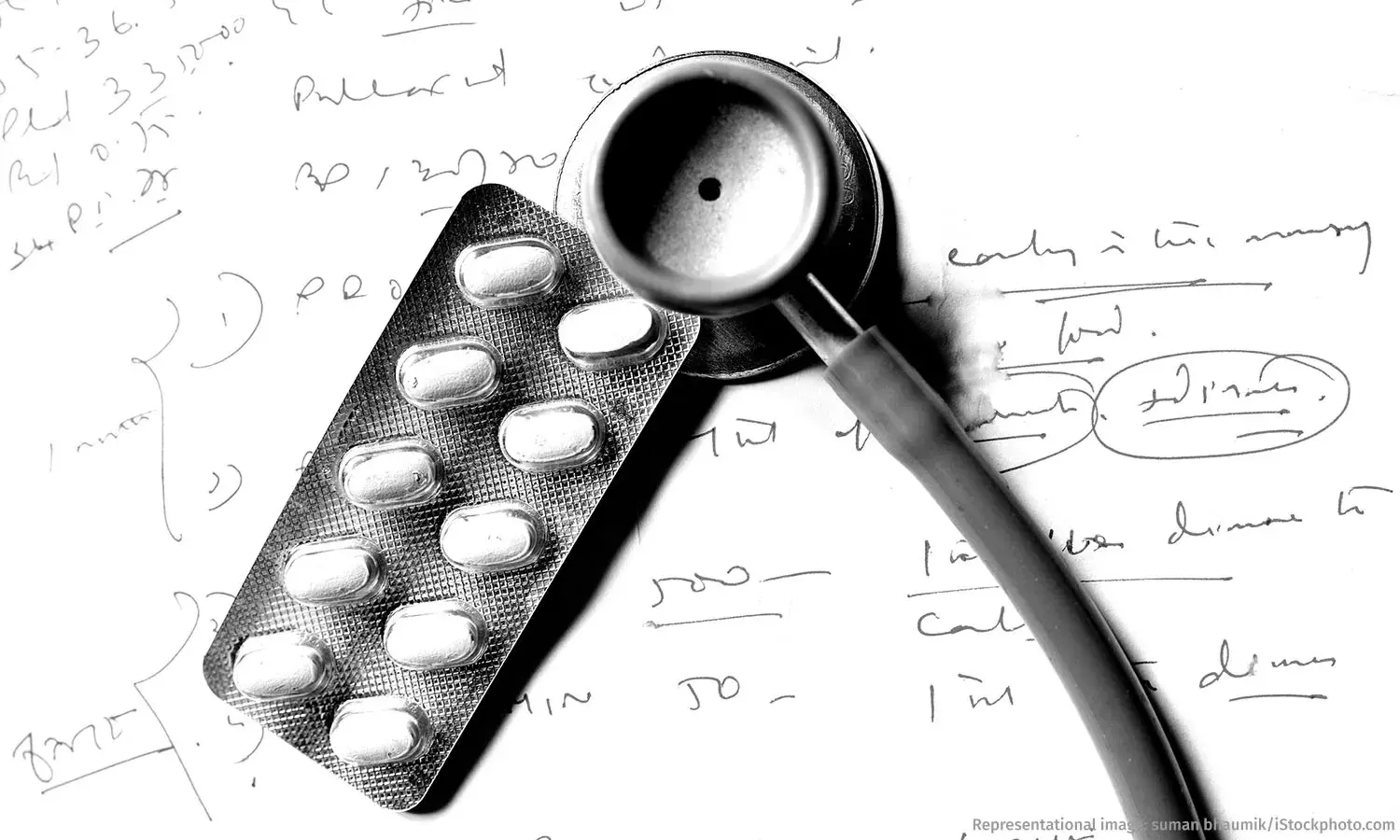
Mount Abu, Rajasthan: India is known as the ‘Pharmacy of the World’ for being the largest global supplier of generic medicines and affordable drugs. Yet, policy gaps compel India’s poor to struggle to source medicines, sometimes at exorbitant rates.
Anywhere between one in three and half of Indian households grapple with health expenses, and millions are pushed into poverty, or deeper into poverty because of insufficient state support. And medicines account for 70% of all out-of-pocket healthcare expenses.
This is the first of a two-part investigation into India's medicine affordability crisis, examining why the generic medicine system fails despite extensive infrastructure. The second part focuses on medicines for rare and specialised diseases.
The prescribing problem
The Jan Aushadhi scheme introduced in 2008, and rebranded Pradhan Mantri Bhartiya Janaushadhi Pariyojana (PMBJP) in 2015, aimed at facilitating the sale of centrally procured reasonably-priced generic medicines.
The problem is, doctors aren’t prescribing medicine by their generic names.
On August 2, 2023, the National Medical Commission Registered Medical Practitioner (Professional Conduct) Regulation 2023 aimed to address this gap. Its Clause 8 reads: “Every RMP should prescribe drugs using generic names written legibly and prescribe drugs rationally, avoiding unnecessary medications and irrational fixed-dose combination tablets.”
But the government withdrew the legislation barely three weeks later, on August 23.
Explaining possibly why, Abhay Shukla, national convenor, Jan Swasthya Abhiyan (People’s Health Movement-India) said, “A single decision in isolation doesn’t work; every element of the medicine prescribing and purchasing system must be addressed—the prescribing doctor, the fulfilling chemist and the patient.”
Instead of passing a solo order, Shukla suggested that the availability of affordable generic medicines in medical stores should have been ensured. A generic medicine contains the same active ingredient as a branded medicine but is much cheaper. Dolo 650 is a popular tablet taken for fever, but its active ingredient, paracetamol, in the same strength, could also be available generically.
Additionally, “mandating pharmaceutical companies to prominently display the generic name on the packaging of all medicines, while minimising mention of the brand name, would have helped to build awareness and credibility about generics among patients,” he added.
In recognition of this irregularity, a 2021 market study of the Indian pharmaceutical sector by the Competition Commission of India (CCI) said: “Patients, uninformed about the therapeutic attributes and substitutes for drugs, take medications prescribed by physicians and dispensed by chemists, since they lack the knowledge and agency to exercise choice and influence market forces to their benefit.”
Put simply, this information asymmetry ensures that more expensive branded generics enjoy market leadership positions while the lowest-selling brands are often the lowest-priced.
The market offers three types of generics: branded generics, less-popular but cheaper trade generics, and unbranded generics. This brand differentiation, the CCI report found, “dilutes the price-lowering effects of generic competition”.
Essentially, the generic purpose will be served “only when all generic drugs in a therapeutic class in their unbranded and branded versions are considered interchangeable and equally efficacious by stakeholders”.
But even if doctors prescribed generics and patients requested them, a fundamental problem persists: Many don't trust that unbranded generics work as well as branded versions.
The quality question
Quality control starts from manufacturing units. In that context, Chandrakant Lahariya, a practicing physician and founder-director of Foundation for People-centric Health Systems in New Delhi, says, “While licensing is a state subject, every state regulatory body has variable capacity. So, in certain instances, the due diligence of a new licensee isn’t adequate, and consequently, substandard manufacturing units bring out substandard medicines.”
“Companies producing generic drugs are often small scale units which don’t fully match the regulatory and stringent quality assurance,” he added.
Procurement is another level at which substandard drugs should be weeded out. The CCI pointed out that centralised procurement systems have helped reduce ‘Not of Standard Quality’ (NSQ) samples because of the multiple quality audit layers they necessitate.
A 2025 study, published in the Research Journal of Pharmacy and Technology, analysed drug procurement across seven states. It identified significant variation in efficiency, cost-effectiveness and drug quality-related performance parameters. While Tamil Nadu and Kerala performed better in drug procurement, budget allocations and compliance in Odisha and Chhattisgarh were of concern.
This study proposed “implementing comprehensive evaluation methodologies and adhering to a benchmark model” to improve the quality of procurement.
The CCI report proposed putting in place “an institutional quality signalling mechanism” by “printing standard compliance marks on unbranded drugs meeting the quality standards,” to dispel the notion of generics being sub-standard.
For competition in generics to move from non-price to price, both drugs must be of the same quality. But they aren’t.
National sampling surveys conducted at the launch of PMBJP showed that 10% of samples of unbranded generics were NSQ as against 3% of branded generics, according to the CCI report.
The general perception among patients and prescribing doctors is that generics are substandard or can’t be fully trusted, and are for the poor, said Lahariya.
“Doctors prescribe branded generics to avoid situations where the medicine doesn’t work as expected and adversely impacts treatment outcomes,” he said. “In this backdrop, branded generics command higher consumer confidence and higher prices.”
Scores of medicines beyond price control regulation
The Pradhan Mantri Bhartiya Janaushadhi Pariyojana (PMBJP) has a limited reach. “Barely 17,000 outlets serve the nation as against 12 lakh retail pharmacies,” said S. Srinivasan, managing trustee, LOCOST, a not-for-profit making affordable essential medicines.
Further, while the government “claims to have tested each batch of procured medicine, there is no mention of quality certificates,” added Srinivasan.
Outlets under the PMBJP stock about 2,110 medicines and 315 surgical items, including 384 medicines covered in the National List of Essential Medicines (NLEM 2022).
Essential medicines are “those that satisfy the priority health care needs, based on efficacy, safety, quality and total cost of the treatment,” and which are subject to price control measures detailed in the Drug Price Control Order 2013.
However, the fact that the NLEM isn’t comprehensive means that the prices of many medicines aren’t fully controlled. NLEM specifies the doses and form (tablet, capsule, syrup. etc.) subject to price control.
This means a manufacturer can evade the price control by bringing out an unlisted strength. For instance, paracetamol 500 mg and paracetamol 650 mg are listed but not paracetamol 1,000 mg. So in theory, a company can charge higher prices for a 1,000 mg dose of paracetamol.
Also, the NLEM includes about 23 fixed dose combinations (FDCs). However, the Indian pharmaceutical market offers many FDCs, which “doctors tend to prefer because they reduce pill burden and increase patient compliance, and also because of pharmaceutical marketing pressure,” said Lahariya.
Experts say many available FDCs combining two drugs of the same therapeutic category are irrational—for instance, combining paracetamol with diclofenac, or paracetamol with ibuprofen, or pioglitazone with metformin. Some FDCs contain up to six drugs, and those are likely to be irrational.
“While the NLEM does well to exclude irrational FDCs, the outcomes are that all those are neither subject to price control nor do the many irrational FDCs available add therapeutic value to the patient,” said Srinivasan.
“We need a mechanism to weed out irrational FDCs,” he said. “Only essential scientific drugs should be available in the pharmaceutical market and they should all be included in the NLEM.”
Bringing every medicine formulation under price control would help ensure that pricing is standardised, and prevent the inflated pricing of brands, agreed Shukla.
IndiaSpend has reached out to Kumar Aman Bharti, director (cost) in the NPPA, for comment. We will update this story when we receive a response.
We welcome feedback. Please write to respond@indiaspend.org. We reserve the right to edit responses for language and grammar.