
9 In 10 Indians Do Not Exercise
Men were nearly three times more likely to exercise than women, and participation was much higher in cities than in villages
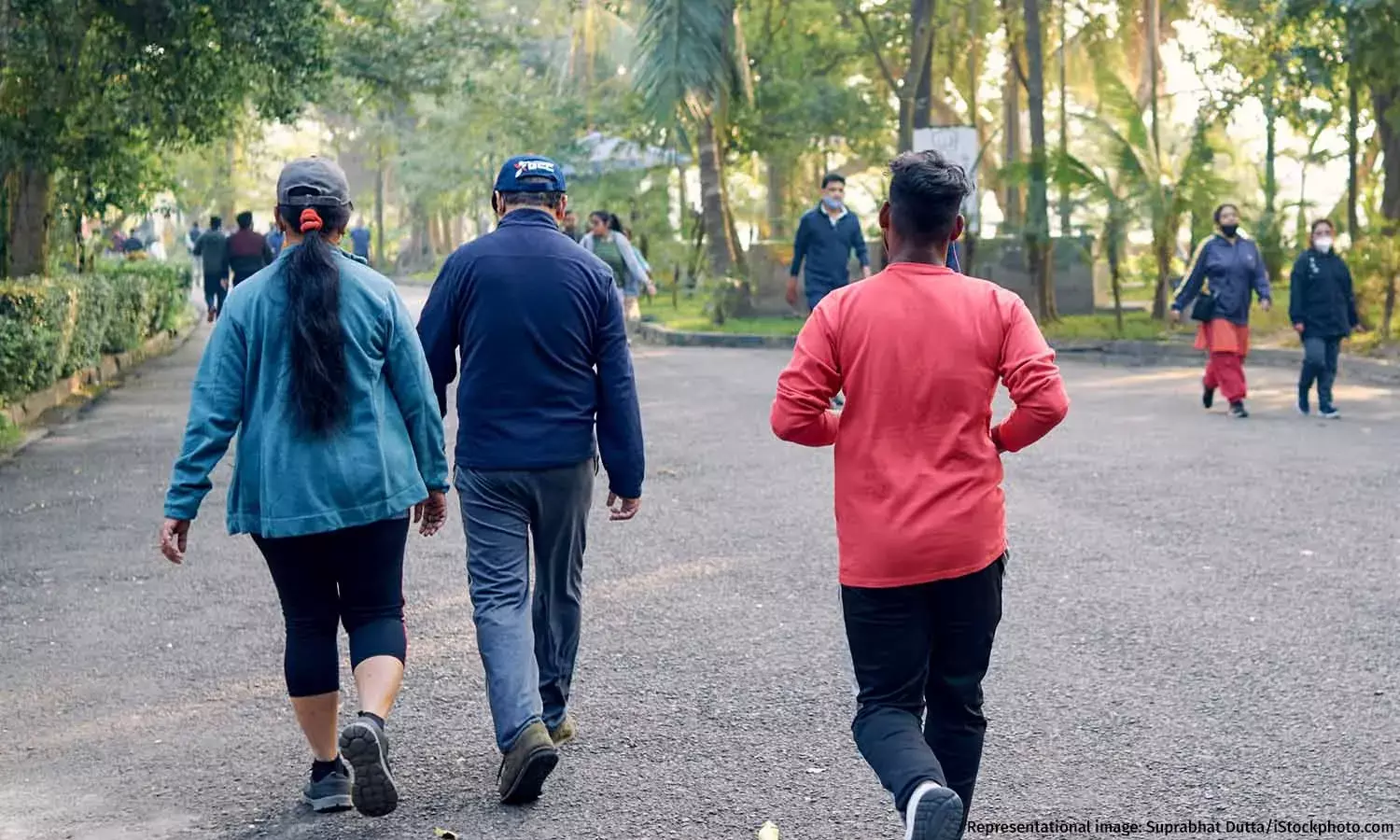
Pune: Only one in 10 Indians exercised on a given day in 2024, according to the Time Use Survey by the National Statistics Office (NSO). Exercise participation has increased since 2019, when 5.7% Indians reported exercising, but remains close to the 8% recorded in the 1998 survey conducted by the Central Statistical Organisation.
Men were nearly three times more likely to exercise than women—14.5% of men reported exercising on a given day compared with 4.9% of women—and participation was higher in cities than in villages. Rural women reported the lowest levels of exercise. Of those who did exercise, men spent an average of 60 minutes, while women spent 56 minutes.
About 14% Indians in cities reported exercising, spending about 61 minutes on average, compared with 7% in rural areas, where the average time was 56 minutes.
Women carry a disproportionate share of unpaid domestic and care work, as IndiaSpend reported in July 2025, leaving them with limited time or energy for exercise.
A 2024 study in the Lancet Global Health, which conducted a pooled analysis of 507 surveys across 163 countries, found that globally, about 31.3% people got insufficient physical activity—up from 23.4% at the turn of the century. “Insufficient physical activity increases the risk of non-communicable diseases, poor physical and cognitive function, weight gain, and mental ill-health,” the study noted.
And the gender gap is clear globally as well: Prevalence of insufficient physical activity was 5 percentage points higher in female than male individuals, the study found.
Fewer women find time for exercise
Only 3.1% of rural women exercised in 2024, compared with 8.1% of urban women. Among men, 11.4% in rural areas exercised, compared with 19.5% in urban areas.
The gap is wider in sports participation. In 2024, only 0.3% of women and 1.3% of men played a sport. Overall, fewer than 1% of Indians reported playing sport on the reference day, with more than four in five participants aged below 20 years.
“Women spend a major part of their time on household work, which leaves little time for proper exercise,” Chaitali Aher, a Pune-based nutrition and fitness consultant, says. “Many also believe that household chores are a form of exercise, which is wrong. We are seeing rising cases of PCOS and thyroid issues among women, mostly related to hormonal imbalances, which is a sign that they are not doing enough exercise.”
Among those who exercised, most did so for short durations—and the average duration declined from previous surveys. About 42% exercised for 30 minutes or less, and another 38% for 30-60 minutes. Roughly 12% exercised for up to 90 minutes, while only 4% spent more than two hours on exercise.
“Exercise is one of the important pillars of good health, along with a balanced diet, rest, regular sleep, and mental health,” Avinash Bhondwe, a family physician with over 42 years of medical practice, explains. “Aerobic exercises like walking, jogging, swimming, cycling, or even climbing hills and stairs are good for the heart, lungs, and blood circulation, as well as for the health of the circulatory and respiratory systems. They also help keep weight under control.”
Speaking of his government’s initiatives to promote sport in the country in his Independence Day speech last year, Prime Minister Narendra Modi cautioned that “obesity is becoming a very grave crisis for our nation”. He cited experts to say that “in the coming years, one in every three people will suffer from obesity”.
The World Health Organization (WHO) recommends 60 minutes of daily activity for children and about 150 minutes per week for adults. In 2024, only 10% adults, 20% seniors, and 1.7% of children met the WHO’s daily activity recommendations, the survey which covered about 450,000 people across the country, found.
The WHO’s Global Status Report on Physical Activity 2022 warns that physical inactivity is a worldwide challenge. More than 80% of adolescents and over a quarter of adults do not meet recommended activity levels. This lack of exercise could cause nearly 500 million preventable diseases by 2030, with treatment costs exceeding $300 billion.
“Walking or cycling alone isn’t enough. For heart health, we need at least 45 minutes of daily exercise,” Aher says. “Even while walking, alternating between fast and slow pace (HIIT: High-Intensity Interval Training) is key.” Aher has over eight years of experience in fitness consultation and also works as a nutrition consultant at a government hospital in Pune.
Sport typically limited to students
Exercise increased with education levels, and improved across all levels since 2019. In 2024, one in four postgraduates (26%) reported exercising, up from 16% in 2019.
Sports participation remained concentrated among school-going age-groups. More than 80% of all participants were below 20 years of age, showing that sport in India continues to be largely driven by children and students.
“In our society, there is a taboo that students don’t need exercise,” Aher says. “If students do regular exercise in their early years, it helps improve bone density, increase height, and build the muscles required for daily functions.”
The age paradox
Exercise participation also increased across all age groups after the pandemic, with higher participation recorded among older adults. Sports participation, however, continues to decline with age.
“Once people retire, they get time to focus on their health. Many older adults start exercising to manage diabetes, blood pressure, or weight, which explains higher participation among the elderly,” Bhondwe says. “People in their 20s and 30s often join gyms, but few continue regularly due to work and time pressures.
“Every school and college should have a compulsory playground and regular physical training. PT or exercise should be treated like any academic subject,” Bhondwe adds. “Earlier, schools in Maharashtra had compulsory Vyayamshalas and PT sessions. Over time, these disappeared, and that has affected physical culture.”
A 2020 Lancet Child & Adolescent Health study found that India, along with Bangladesh, reported some of the lowest levels of physical activity among adolescent boys and girls compared to other regions. The researchers suggested this may reflect societal factors, with girls in South Asia being required to support chores around the house.
Most Indians preferred early mornings for exercise. In 2024, activity peaked at 6.30 a.m., when 25.6% of exercisers were active. Between 5 p.m. and 9 p.m., participation remained between 8% and 10% across several slots.
Wealth, caste, and marital status shape who exercises
Among married Indians, 17.3% of men exercised in 2024 compared with 4.5% of women, a pattern similar to 2019 and 1998. The difference persisted among the widowed and unmarried as well, where men were about twice as likely to exercise as women.
Variations also persisted across caste groups. In 2024, 13.3% of people in the ‘others’ category reported exercising on the reference day, compared with 9.1% for Other Backward Classes, 7.9% for Scheduled Castes, and 6.9% for Scheduled Tribes.
Exercise participation also increased with household spending. In 2024, about 17% Indians from families that spent more than Rs 24,000 per month exercised on the reference day, compared to 8.4% for those who spent up to Rs 6,500 per month. Gender differences persisted at every level of household expenditure.
Some states move more than others
In 2024, Goa (24.1%), Himachal Pradesh (21.5%), and Haryana (17.5%) recorded the highest activity levels, while Maharashtra (14.6%) and Karnataka (13.7%) were above the national average of 9.7%. Less active states recorded smaller increases since the last survey.
The consequences of low physical activity extend beyond fitness. The WHO warns that physical inactivity contributes to cardiovascular disease, diabetes, obesity, and mental health conditions. In India, where non-communicable diseases are rising, low exercise rates—especially among women and disadvantaged groups—signal a public health challenge that mirrors broader social inequalities.
Narrowing these gaps will require addressing not just individual behavior but structural barriers—unequal domestic work burdens, infrastructure deficits, and the time-poverty that prevents India's most disadvantaged from being physically active.
IndiaSpend wrote to the Union health secretary seeking responses on the role of public health programmes in promoting physical activity and assessing progress against global benchmarks. This story will be updated when we receive a response.
Methodology:
The Time Use Surveys 1998, 2019, and 2024 were conducted to record how people across India spent their time during a reference day.
The 1998 survey was conducted by the Central Statistical Organisation (CSO) through an interview method. It covered six states and included about 63,000 respondents. Each respondent’s day was divided into 60-minute time slots, unlike the later surveys that used 30-minute intervals.
The 2019 and 2024 surveys were conducted by the National Statistics Office (NSO) using a 30-minute activity diary method. Each person’s day was split into several time slots, so one respondent appeared in multiple rows for different parts of the day.
From the 1998 survey by the CSO, we used the activity titled ‘Walking, exercising, jogging, yoga, etc.’, while for the NSO surveys in 2019 and 2024, we used activities labeled as ‘exercising’ and ‘participating in sports’. As per the 2016 classification adopted in the survey, “exercising” refers to physical activity focused on health benefits. It includes walking, jogging, running, cycling, swimming, yoga, aerobics and other fitness programmes such as martial arts or group exercise.
For the 2024 dataset, a unique Person ID was created to identify each respondent (for example, 32223-05-001, combining FSU_Serial_No: 32223, Sample_HH_No: 05, and Member_Serial_No: 001). This process produced 450,457 unique persons in the master dataset.
For the 2019 dataset, a similar composite ID was generated using the same three identifiers, FSU Serial Number, Sample Household Number, and Person Serial Number. For example, 210507_3 represents one respondent. This process produced 445,299 unique persons in the dataset.
For analysing physical activity, the report used activity code 832 (“Exercising”) and 831 (“Participating in sports”), which record time spent on structured exercise and sports. Each person’s total daily duration was calculated by adding all time slots tagged with these codes. If someone reported the same activity more than once, those durations were combined to find their total daily minutes.
We welcome feedback. Please write to respond@indiaspend.org. We reserve the right to edit responses for language and grammar.