
The Frontline Workers Who Register 90% Of India's Births—And Why 10% Slip Through
With a 90% registration rate, India may have missed counting a population equivalent to that of Bhopal
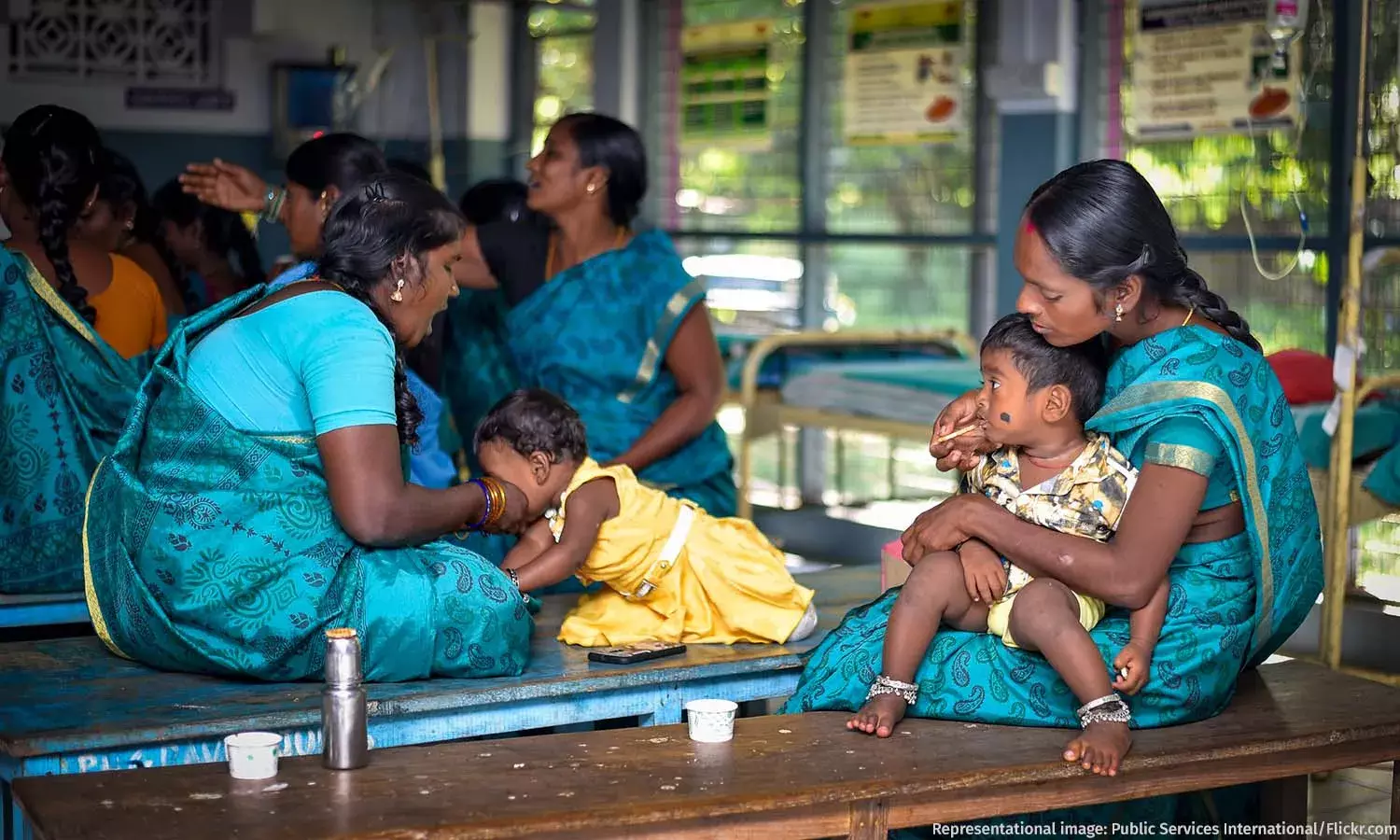
New Delhi: “I know ASHAs who have walked through snake-infested fields in the rains to visit women who gave birth in hospitals just to make sure that the newborn has a birth certificate,” said Suvarna Kamble, an accredited social health activist (ASHA) in Palghar in Maharashtra.
ASHAs are India’s frontline health workers, who along with auxiliary nurse midwives (ANMs) and health assistants, are the first—sometimes the only—point of contact for millions of Indians with the country’s healthcare system.
They handle a range of tasks: From fever surveillance, antenatal care and accompanying pregnant women to healthcare facilities. The bulk of India’s healthcare data is generated and maintained by these frontline workers. For this, they are paid an honorarium which is barely enough to make ends meet.
“[M]ore than 90% birth or death events are getting registered”, according to a March 2025 circular by the Registrar General of India. This means, about 2.8 million births—more than the population of the town of Bhopal—and one million deaths are left unregistered each year.
Births and deaths that occur at home are to be reported by the head of the household, health worker or midwife to the district registrar. For those occurring in health centres, this duty falls to the health inspector.
Registering a live birth requires the ASHA to fill Form 1 of the CRS. Separate forms are issued for deaths and stillbirths. An ASHA has to ensure that they spell the names of the parents exactly as they appear in their Aadhaar. Similarly, when registering a death, they have to spell the names of the deceased and their family members in line with the Aadhaar. “If it is not, the certificate is not issued,” says Kamble.
In India, where names are often misspelt across documents, this becomes tricky. Access to critical entitlements depends on this seemingly small detail.
Birth registrations are higher than that of deaths in most states in the country. “Due to [a need for] other forms of documentation, people are recording births, but there is still a lack of awareness on registration of death and that explains the disparity between the two rates,” explained Adil Hossein, a demographic researcher at Azim Premji University in Bengaluru. Birth certificates are required for school admission, obtaining an Aadhaar card, applying for a passport, and accessing government schemes. Death certificates are primarily needed for inheritance, insurance and compensation claims.
However, that does not mean that getting people to report births is easier than doing so in the event of a death. “New mothers and infants are entitled to benefits that we are willing to take to their doorstep. Yet, some people object to our frequent visits,” recounted Kamble. They worry that the ASHAs will weigh the mother and infant and chide the family over not caring for the duo adequately, she added.
Death in a hospital
While ASHAs handle home births and deaths, institutional deliveries follow a different path.
In the basement of a large private hospital in Noida in Uttar Pradesh, we met two officials who, along with a third official, handle the paperwork related to the Medical Certification of Cause of Death (MCCD) for every patient who dies in the hospital. A separate department handles the births.
“We go to the district registrar every day with the certificates issued by the doctors to report the deaths,” said one of them. Deaths, like births, are to be reported at the place of occurrence, she explained, meaning that patients who travel to the hospital for treatment from elsewhere are counted among the dead of Noida for that day.
This also means that their kin have to get the certificate from the district authorities. “If all the paperwork is in order, the certificate can be issued within seven days of the death being reported. However, if the required documents are not provided to the hospital within 21 days, the kin of the deceased have to report to the district registrar for the certificate,” she added.
Reporting a death is not the same as getting a certificate—the certificate also includes the medically certified cause of death. While 97.2% deaths were registered across the country in 2023, only 23.4% were medically certified. Without knowing how people die, gaps in health system accountability remain, while also hampering research, diagnosis and treatment of diseases, IndiaSpend reported in May 2025.
The registration rate itself is calculated by comparing the number of registered deaths and births in the civil registry with other sources, explained Hossein.
The numbers
Between 1971 and 2023, India’s birth rate halved, from 36.9 births per 1,000 people to 18.4 in 2023, as per data from the Sample Registration System (SRS). The death rate, too, fell—from 14.9 in 1971 to 6.4 in 2023. The number of registered births and deaths in India was 25.2 million and 8.6 million in 2023, as per the Civil Registration System (CRS).
The SRS is an estimate of the changes in the population. The CRS, on the other hand, counts every birth and death in every district of every state in the country. These data are used to gauge socioeconomic development and family planning, as per the Registration of Births and Deaths Act 1969.
Registration of births and deaths is an important source for demographic data for socio-economic development and population control in developing countries. The data on population growth, fertility and mortality serve as the prime constituent for population projections.
Apart from these vital indicators, an adequate evaluation of a number of programmes in the health sector—including family planning, maternal and reproductive health, immunisation programmes—is dependent upon the availability of accurate, up-to-date fertility and mortality data.
In 2022, IndiaSpend reported on the estimates of excess deaths from Covid-19 using data from the CRS. The estimated excess toll from the pandemic was around ten times the official number of deaths, we found.
In 2023, only 32% of the deaths in Nagaland were registered as per the CRS, the lowest in the country. Sikkim had the lowest birth registrations (64%) in that year.
IndiaSpend has written to the Ministry of Women and Child Development and the Registrar General of India to inquire about the incentive paid to an ASHA for filing a CRS form, the increase in the rate of reporting since 2018, the proportion of births and deaths reported online and the penalty for not reporting a birth or death. This story will be updated when they respond.
Closing the gap will require addressing the challenges frontline workers face: better compensation, reliable internet for online registration, simpler verification processes, and recognition of the work that happens in snake-infested fields and difficult terrain.
We welcome feedback. Please write to respond@indiaspend.org. We reserve the right to edit responses for language and grammar.