
Beyond Bus Fare Subsidy Schemes: Tracing Urban Women’s Access to Gender-Responsive Mobility
Although bus fare subsidies eliminate the economic barrier, major gaps in public transport infrastructure and services continue to strain women’s access to the city
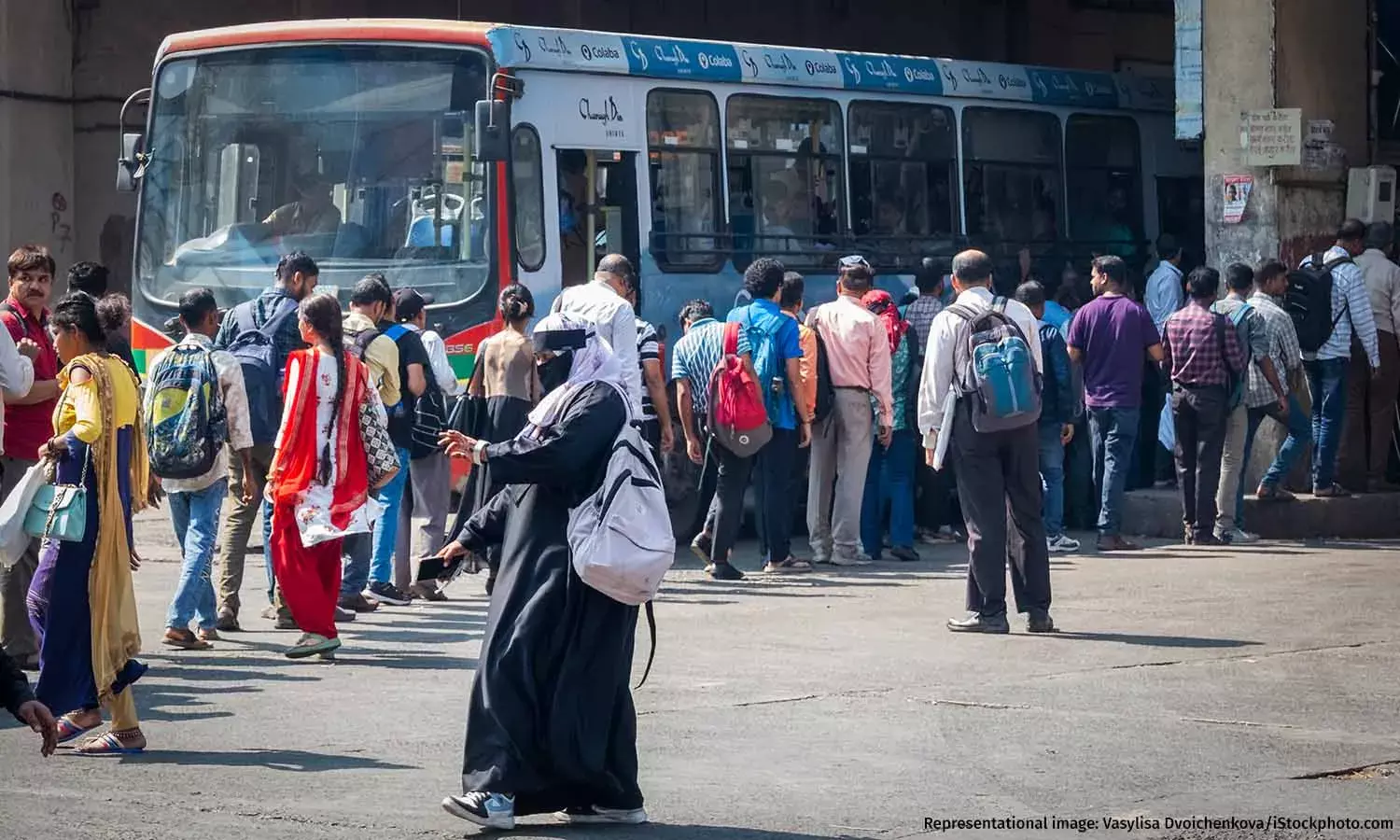
Gandhinagar, Gujarat: Several Indian states now provide fare-free bus travel for women, and this has a measurable impact on labour force participation, health-seeking behaviour and overall mobility, studies show.
But that is not enough. Buses and other modes of public transport are overcrowded, street sexual harassment is common, and women face hostility from male passengers and staff for being beneficiaries of perceived freebies.
In addition, the schedules of public transport are often dictated by peak hours, while many women need to travel at off-peak hours—and in patterns distinct from men. Addressing these problems can help more women benefit from free bus travel.
Women are more dependent on public transport than men, a December 2017 study by the Institute for Transportation and Development Policy (ITDP) found. Although transportation-related barriers restrict travel for both men and women, they disproportionately impact the latter. Inefficiencies in public transit systems often translate into girls missing school, women limiting themselves to opportunities closer to home, unemployment, and the inability to access health or childcare services.
Conveyance accounts for 8.5% of household expenditure in urban India, the biggest share of non-food spending during 2023-24, according to the Survey on Household Consumption Expenditure.
However, fully or partially subsidised bus rides have cut urban women's transport expenses thereby increasing their employment outcomes, healthcare budgets and overall savings, as per a 2025 report by Nikore Associates that surveyed women across ten cities.
Gendered mobility patterns
As much as 84% of women’s work-related travel is done using informal modes of public transport, including buses, autos, tempos, etc. besides walking, as per Census 2011. However, public transport services are not traditionally designed to cater to their distinct mobility patterns.
For instance, women are more likely to “trip chain”, i.e., combine multiple tasks and destinations within one trip, as compared to men, as IndiaSpend reported in April 2018 based on the ITDP study. This results in frequent but shorter trips, shaped by their employment status and mobility of care. Consequently, trip chaining makes travel costlier since women usually use multiple modes of transport—and may have to pay numerous single fare tickets during such a chained trip.
Studies suggest that women end up spending additional time and money for a ‘safe’ and ‘convenient’ mode of transport which imposes a “pink tax” on their mobility.

Urban India's labour force participation rate stood at 25.8% for females and 75.6% for males during 2024. Transport infrastructure influences whether women work outside the home or not, the State of Working India 2023 report found.
Women are time-poor—owing to the burden of unpaid care work and weaker access to household resources—and often depend on cheaper and slower modes of transport, especially when they belong to lower-income groups.
This is why an efficient first- and last-mile connectivity—their journey from the starting point to the nearest bus stop, and from the bus stop to the final destination—is one of the most critical links of their day-to-day travel.
Intermediate Public Transport (IPT) is extensively used by urban women due to its availability, convenience, and wide network, especially in areas outside formal public transport’s coverage. In India, IPT options include auto-rickshaws, shared rickshaws, e-rickshaws, private buses and tempos. They remain indispensable for making short trips of less than 2 km.
Vandana Vasudevan, doctoral researcher and author of a book on gig workers, highlighted that every city tailors local solutions. “Noida’s e-rickshaws ferry people to and fro, while some cities have bus shuttles. Further, some transport authorities have tied up with ride-sharing providers like Uber, Ola and Rapido,” she said.
IPT sees lower levels of sexual harassment compared to buses, but Sonali Vyas, Director of Programs and Operations at Safetipin, warns that the safety aspect is still missing.
“Our study assessing women’s mobility in Gwalior, Bhopal and Jodhpur observed high dependence on IPT which is often overcrowded, and therefore unsafe. But since they’re not operated by the government, female commuters would take the harassment silently due to lack of complaint channels and better public transport options,” she said.
Continued battles
Delhi’s fare-free public transport (FFPT) scheme launched in 2019, aimed to enhance women’s empowerment and safety in public transport systems. It offers free bus rides for women on all government-owned buses within city limits by issuing pink tickets, for which the Delhi government reimburses the bus operators with Rs 10 per ticket.
Between 2019 and 2023, women’s share of total daily ridership increased by 20%. Furthermore, the ‘pink ticket’ scheme enabled 50% of respondents to save at least Rs 500 per month, primarily benefiting low-income women, a March 2025 study by WRI India, which surveyed over 2,010 women bus users in Delhi, found.
By providing financial relief, it has allowed urban women to reclaim time typically spent on domestic and caregiving responsibilities—also known as “mobility of care”—and redirect it toward greater socio-economic participation that benefits them, their households and the economy alike.
Broader social implications of Delhi’s scheme include stronger female presence in public buses and higher travel flexibility.
While 73% of surveyed women were already bus riders, another 21% shifted to using buses after the introduction of FFPT, the WRI India study found. It also noted the scheme’s role in easing the financial burden on college students.
Among women from economically marginalised groups, a 2023 study revealed an increase in average employment by 24 percentage points and their time spent on paid work by 2.5 hours.
Other states follow
Several states including Tamil Nadu, Punjab, Telangana, Andhra Pradesh and Karnataka have implemented similar schemes, while Maharashtra has introduced bus fare concessions.
Launched in 2023, Karnataka’s Shakti programme provides free bus travel to women and transgender residents. A 2024 JustJobs Network study, which surveyed over 780 women across five districts, found that for over 80% of the respondents, buses were the preferred means of transport. And 62% respondents reported the scheme had allowed them to travel for additional work.
“Both regular salaried and self-employed women reported on average saving over Rs 1,000 per month which is reinvested into household expenses such as food and children’s education,” said Renjini Rajagopalan, research lead at the Centre for Gender Analysis at JustJobs Network.
The scheme has also enabled a greater sense of agency and empowerment. “A majority of women are now able to afford ‘non-work’ travel, including access to healthcare, pilgrimages, or other forms of recreation,” she added.
“But the real question is whether the change has been from walking to bus because that might be a really impactful shift, in terms of reducing women’s time-poverty,” noted Sonal Shah, founder of The Urban Catalysts (TUC) and executive director at the Centre for Sustainable and Equitable Cities.
The gaps
While these schemes help remove the economic barrier to accessing the city, they do not make travel safe, Vyas said, adding that several infrastructural gaps still exist.
It is commonly perceived that women are misusing bus fare subsidies to cover short distances or for leisure activities. “These schemes are funded through taxes that citizens already pay. Providing free or highly subsidised mobility is simply a way of returning value to taxpayers by ensuring that everyone benefits from a service that is essential for daily life, economic participation, and social inclusion.”
Despite its critical role, India's current public transport infrastructure indicates serious inequities. “Women do not fall under a homogeneous category as their travel-related trends differ across age, socio-economic groups and disability. However, a fundamental barrier that almost every woman faces is physical access,” said Vyas.
Resource-poor women and women with disabilities often face discrimination in public spaces. “Street vendors are usually not permitted to carry their goods on the bus and female passengers often face ‘taunts’ from male co-passengers and frontline workers alike,” says Shah.
For instance, 54% of women reported receiving insulting remarks from both the transport staff and male passengers while 42% faced discriminatory behaviour, including bus drivers refusing to stop for them or stopping far from the bus stop, or being asked to take the next bus, found the WRI India study.
Women, particularly from low income groups, often travel during off-peak hours. Owing to domestic responsibilities, they leave their homes after the men have left for work and before the children come back from school—when the frequency of public transport is lower and waiting time is higher.
To better serve marginalised groups, there are opportunities to partner with the private sector. Since standard buses cannot operate in neighborhoods, such trips can be accommodated by shared autos. “While advising Jagori on their 2023 study, we found that street vendors living in Ranchi’s outskirts would collectively hire an auto at 4 a.m. to travel within the city,” said Shah.
Alternatively, with clearer communication on routes and timings, subsidy schemes can include neighbourhood bus services for trips within 4 km. “This would not only improve last-mile connectivity but also reduce distances travelled by women on foot. Cities must ensure dignity of service to all, especially the disabled and marginalised women,” she added.
Rajagopalan said that careful route planning to low-income neighbourhoods and city outskirts can boost FFPT schemes’ benefits. “For example, domestic workers may have to travel relatively short distances many times a day; this requires short distance stops and higher frequency buses,” she added.
Recurring issues in bus transport planning
Street sexual harassment is one of the most significant challenges hindering urban women’s mobility. A 2021 study by the Observer Research Foundation (ORF) found that 56% of women across 140 cities reported being sexually harassed while using public transport. “Sexual harassment due to overcrowding is directly linked to the number of available buses (and their schedules),” highlighted Shah.
Moreover, underreporting of such incidents due to social stigma, limited information regarding grievance mechanisms, and lack of trust in authorities, further exacerbate security concerns. And 91% of female commuters who have faced sexual harassment never registered a complaint, found a 2024 study by TUC. In fact, women across cities with full, partial, and no fare subsidies reported similar rates of harassment, revealing that subsidy schemes alone do not guarantee a sense of safety.
The fear of sexual harassment is closely linked to deficient infrastructure. In 2019, Safetipin assessed over 3,000 bus stops across Delhi and highlighted poor lighting and damaged footpaths as major concerns.
Multiple studies by Safetipin have consistently observed that women across cities feel unsafe when traveling from their house to the bus stop, while waiting at the bus stop and inside the bus, especially at evening hours, Vyas said. Moreover, lack of street lights, opaquely designed bus stops with inadequate shelter as well as absence of designated waiting areas increase vulnerability to assault.
For women with disabilities, these barriers are far more acute, said Aishwarya Agarwal, lead at Centre for Inclusive Mobility, OMI Foundation. Inaccessible bus stops, lack of low-floor fleets, broken sidewalks, and the absence of assistive features make buses extremely difficult to use, noted the OMI Foundation’s report. “Many also report heightened risks of harassment when they require assistance to board or alight,” she added.
“Most tier-2 and tier-3 cities still have high-floor buses and often lack ramps at bus stops,” said Vyas.
Another persistent issue is the lack of real-time information on bus arrivals or communication around a possible bus breakdown, as per Shah. “To counter this, a number of cities have introduced audio announcements of the upcoming bus stop as well as buses, however we don't have a consistent level of service responsiveness across India,” she added.
Furthermore, women living along the city’s periphery complained of low-frequency bus services and distant bus stops. “Despite women’s heavy reliance on public transport, urban bus networks are still largely designed around peak-hour, heterogeneous-working, non-disabled male commute patterns, rather than the multi-stop, care-related trips that women frequently undertake,” said Agarwal.
Need for gender-responsive policies
Improvements in safety, reliability and convenience of public transit systems are aligned with India's broader developmental goals of promoting gender equality (UNSDG 5), ensuring sustained economic growth and decent work for all (UNSDG 8), and creating inclusive, safe and sustainable cities (UNSDG 11).
Fare subsidies are but one piece of a giant puzzle. “To retain female commuters, states must focus on developing what we call an ‘ACSAR’ (translates to frequent in Hindi) public transport system, i.e., affordable, connected, secure, accessible and reliable,” suggested Shah.
An ORF report found that almost 50% of respondents turned down work or educational opportunities due to safety concerns.
Additionally, Shah emphasised the need for schemes that combine fare subsidies with other critical interventions, facilitating women’s switch from being captive to choice users. “If we look at marginalised women who commonly travel by buses, the moment they have access to a two-wheeler, most will skip the bus,” she explained.
Highlighting the importance of women’s participation in urban transport planning and design, Agarwal underscored the need for gender-responsive budgeting and a systematic collection of gender-disaggregated data.
Simultaneously, Shah called for a realistic assessment of the FFPT schemes’ impact. “We must look for correlations between increased ridership and different socio-economic variables to show a direct impact on women's lives (improved employment and education outcomes, reduced time-poverty, etc.), and not just households,” she suggested.
The design of bus systems and their supporting infrastructure significantly impacts women’s level of safety, confidence, and comfort. “Both buses and bus stops must comply with universal principles of design to aid all types of passengers, whether physically challenged, seniors, children, women or men,” said Vasudevan. In favour of women-only buses, she highlighted how steep steps of public buses are particularly antagonistic to women who often wear saris or travel with grocery bags or small children.
In addition, recruitment of female service providers at every level is key to not only challenge cultural biases but also promote a gendered lens to management and operations. “We need to see more women as frontline workers, depot managers, maintenance supervisors, etc. and not just as drivers, conductors or the cleaning staff,” she added.
Apart from operational improvements like bigger fleet size and peak capacity planning, Vyas highlighted the role of mandatory gender sensitisation training for the entire transport personnel, functional emergency helplines, robust grievance redressal mechanisms and regular audits at bus depots.
“During our assessment of Delhi’s Mehrauli bus terminal, a bus conductor shared that passenger complaints can take over a month to reach the depot and at times, the staff must pay the penalties due to lack of timely verification with the complainants,” she explained.
“There are women who choose not to travel just to save the cost of a Rs 10 bus ticket,” shared Vasudevan. To maximise the impact of FFPT schemes, governments and other stakeholders can undertake extensive awareness campaigns, particularly for marginalised women.
“State governments must ensure that subsidies come across as policy initiatives instead of ‘freebies’. These schemes have a larger role in these women’s economic empowerment so let’s talk about what we stand to lose without such schemes in place,” Vyas added.
IndiaSpend reached out to the transport departments of Bengaluru, Kolkata, Mumbai and New Delhi for comments on how they are tackling issues such as overcrowded buses, inaccessible infrastructure, discriminatory behaviour of transport personnel and unresponsive grievance redressal mechanisms, as well as the steps they are taking to support RPW and women with disabilities. We will update this story when we receive a response.
We welcome feedback. Please write to respond@indiaspend.org. We reserve the right to edit responses for language and grammar.