
How Indian Cities Are Turning Into Heat Islands
As trees disappear and concrete expands, India's urban heat crisis is costing billions—but Tier 2 cities still have time to chart a different course
Chennai: D. Tamilselvi recently retired as a community health nurse from the Medavakkam primary health centre after 40 years of service. “In the beginning, I remember always having tree shade to park my cycle, to administer vaccines and write field reports,” the 60-year-old says.
But around the turn of the century, she began to dread the twice-weekly field visits. The trees that provided respite were gone, and open areas became buildings. “I began to sweat and struggle in the heat even in October,” she recalls.
About 300 km away in Bengaluru, V. Harshitha struggles to deliver food and groceries in the summer. A second-year visual communications student from the temple town of Tirupati in Andhra Pradesh, Harshitha works as a Swiggy delivery personnel from 2 p.m. to 8 p.m. “I specifically chose Bengaluru because I thought it wouldn't be too hot to work outdoors like my native town. But even in June, I check the temperature every day and while my phone says 30°C, I feel like it is much hotter when I am outside.”
In Delhi’s Bakkarwala, Anshu Thakur, a tailor, is losing income due to increasing heat. “I am unable to work due to the discomfort I feel inside my home. This is despite having an air cooler and using reflective paint on the roof,” she says.
Thakur used to make Rs 600 a day for six hours of work. Now, she barely makes Rs 200. Apartments have cropped up in the empty spaces around Bakkarwala. As localities with greenery are comparatively cooler, the residents are now planting more trees.
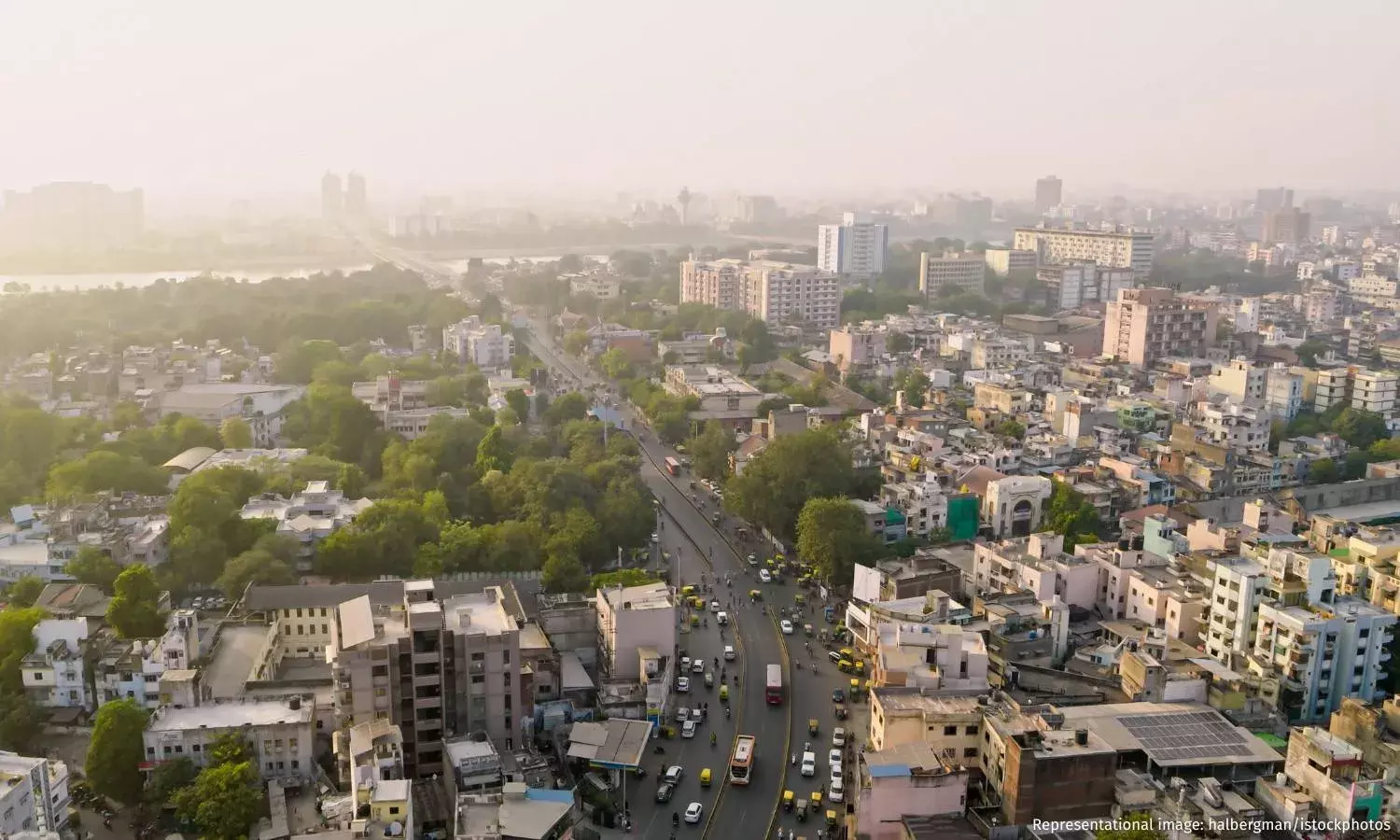
The common thread tying these experiences is the Urban Heat Island (UHI) effect--a phenomenon where cities experience warmer days and nights as concrete and heat-radiating structures (such as glass and metal) replace original land cover. Anecdotal evidence and a growing number of scientific papers link the growing UHI effect to rampant and unsustainable urbanisation at the cost of green cover and water bodies.
This has increased the temperature of the ground, roadways and buildings—referred to as the land surface temperature (LST). And this in turn has led to a UHI crisis in our cities.
In a two-part series, we look at what’s causing the crisis in nine Indian cities.
Detriment to health and productivity
Over time, sustained high LST can turn heat events into prolonged crises, altering local climates and ecosystems. This unchecked LST rise has now become both a symptom and a driver of the escalating UHI crisis in Indian cities.
And the impacts are far-reaching. The 2025 report of the Lancet Countdown on Health and Climate Change shows that Indians were exposed to, on average, 19.8 heatwave days each—and a third of these would not have occurred if not for climate change.
Heat exposure led to a loss of 247 billion potential labour hours—or a "record high" 419 hours per person, 124% more than during 1990-1999. Agriculture (66%) and construction (20%) suffered the most losses. This led to an income loss of $194 billion.
Globally, failure to curb the warming effects of climate change has seen the rate of heat-related deaths surge 23% since the 1990s, to 546,000 a year, the report found.
By 2030, India is expected to lose around 5.8% daily working hours due to rising temperatures. This in turn will erode productivity and lower the collection of fiscal revenue, according to a report by the United National Economic and Social Commission for Asia and the Pacific (UNESCAP). A study from 2021 confirms that temperature can influence worker output through different channels and that people may be more likely to miss work on very hot days. The study says that a one degree warming is estimated to reduce manufacturing output by about 2%.
In short, heat is equally an economic problem that urban India is not fully prepared for and if city governments do not adopt immediate interventions, both health and wealth will be impacted, say experts.
A 2021 research paper from the United Nations Environment Programme (UNEP) further states that if the current trends in urbanisation and increasing heat continue, it is expected that the urban population exposed to high temperatures—that is, average summertime highs above 35oC—will increase 800% to reach 1.6 billion by mid-century.
If we continue on this path, “heatwaves will intensify, rising heat will lead to health risks, productivity loss will increase and energy demands will intensify”, says Anjal Prakash, Intergovernmental Panel on Climate Change author and research director at the Bharti Institute of Public Policy, Indian School of Business. “Vulnerable communities such as outdoor workers and slum dwellers will suffer the most because they don’t have the economic capacity to improve their thermal comfort. Urban heat will compound air pollution, water stress and inequity. If we go on like this, our cities will become unlivable.”
From green to grey
The data indicate that the interplay between rapid urban expansion and heat intensification is deeply entrenched into the evolving land dynamics of Indian cities. The roots of accelerated urbanisation for most Indian cities can be first traced to 1991.
“In India, urbanisation has occurred at an unusual rate in recent decades, particularly following the 1991 economic reforms,” a November 2022 study notes. “Urbanisation over a region was closely attributed to the rising trend in population due to either natural means or through migration.” The second wind for the rising urban sprawl came through the technology boom in the 2000s, as in the case of Bengaluru. And satellite images show this quick transition, as we explain in the second part of this series.
The elevated heat level is especially pronounced in regions where natural water bodies and green cover have either shrunk or disappeared entirely. In Jaipur for instance, historic water bodies such as the Ramgarh and Sambhar lake have dried up and shrunk, respectively over the last three decades. This has reportedly been due to numerous encroachments and obstruction in the catchment areas. Ramgarh lake has been dry since 2000 and in the 20 years since this occurred, Jaipur's LST has risen by 1.8°C.
“Cities technically have master plans and climate action plans but they have not been brought together to create a comprehensive policy on development and expansion in the face of a climate crisis,” says Aravind Unni, an urban policy expert. “Today, we face an urban heat island crisis because there were no regulations in regard to the ratio of shade or green cover to built up area.”
“At a macro level, the Ministry of Urban Affairs and the Ministry of Environment and Climate Change are not even working together to tackle heat stress. This is a major governance failure.” he adds.
IndiaSpend has reached out to both ministries for comment. We will update this story when we receive a response.
Experts say land development has progressed without parallel investment in green infrastructure or environmental safeguards. While heat action plans (HAPs) have now become mainstream, most HAPs are underfunded, not built for local context, are poor at identifying and targeting vulnerable groups; have weak legal foundations; and are insufficiently transparent, according to a 2023 review of 37 HAPs by the Centre for Policy Research.
“Cities need heat action plans that go beyond the advisories that mandate the cool roofs, reflective surfaces, shaded streets and also urban forests. Building codes must integrate passive cooling and energy efficiency,” says Anjal Prakash, IPCC author and research director at the Bharti Institute of Public Policy (BIPP), Indian School of Business.
The disconnect between policy intent and ground reality is evident in how buildings actually get constructed.
For builders, the focus is to ensure using maximum built up area in any given plot. “This has meant a blatant violation of existing building rules in regard to the floor space index,” says a project architect and interior designer who has worked on multiple residential complexes in the suburbs of Indian cities who did not want to be named. “While smaller buildings aren’t subject to much scrutiny or concerned about not receiving a completion certificate, larger projects are able to circumvent the minimum tree cover rule through connections and corruption. When we submit the design to the development authorities, we show the minimum required tree cover. But when it comes to fruition, that space is mostly allocated for parking. Builders say that budget homes (Rs 1 crore to Rs 3 crore) do not sell if they don’t offer at least two parking spots per home.”
To prevent legal trouble, her firm sends an email to the builder they work with objecting to the violation and ensuring their disapproval is on record. “Sustainability cuts into profits,” she points out.
‘Retrofitting cities is harder than creating new plans for cities’
Research identifies four key cooling strategies—urban greening, changing surface material in built up areas, improving/ adding water bodies and urban form optimisation.
Across the country, cool roofing efforts in low income households are already underway and have yielded positive results, with white solar-reflective paint on rooftops lowering temperatures by 4-5°C. Cooling strategies such as setting up a rooftop garden can reduce indoor temperatures as much as 4-5°C and water-filled PET bottles by least 1-2°C.
"Although urban expansion is irreversible, shading, natural ventilation and reflective materials can be employed to passively cool existing buildings,” says Shikha Patel, a research assistant at the Department of Architecture and Urban Planning in Qatar University. "In Bengaluru for instance, soil facilitates the expansion of green cover through the installation of additional trees, green roofs, and vertical gardens, which in turn naturally cool neighborhoods and alleviate heat stress. These straightforward measures can rapidly enhance the quality of outdoor living and enhance the livability of the city," she adds.
Experts further suggest that progress is only possible if communities participate willingly. “Governments need to make strong efforts to spread awareness about the impact of the UHI crisis and increase in LST to people. At a household level, the need for changes to the rooftop, building design and material use has to be communicated,” says Unni.
“For the microclimate to be fixed, we need to institutionalise the right policies for expanding green cover and increasing shade with the public onboard. Simply painting roofs white does not solve the UHI crisis,” he adds.
"Where is the space to improve green cover? There is rampant and illegal construction across cities. There are people living in these built environments. Can they all be evicted? It is a failure of the system that they live there," says Abhiyant Tiwari. “Tier 1 cities are almost beyond repair at this point. If we have to take on such a mammoth task, it requires strong and harsh decision making." he adds.
V. Vinoj, associate professor at the School of Earth, Ocean and Climate Sciences, IIT Bhubaneswar questions how water bodies and additional tree cover—enough to make a difference—can be created in congested zones without disrupting the existing built up area. "It is incorrect to think that green cover alone will cool down every city—it depends on its geography, rainfall pattern, wind patterns. Similarly water bodies can’t be created in a concrete jungle. Retrofitting cities is harder than creating new plans for cities,” he points out. His study shows that smaller cities such as Jamshedpur, Raipur, Patna and Indore rank highest when it comes to contribution of urbanisation to LST.
How are Tier 2 cities faring?
Tier 2 cities—expanding rapidly without the infrastructure or planning capacity of larger cities—face their own escalating challenges.
Every summer, Narender Khandelwal, CEO of Floking Pipes Private Limited, a manufacturing unit in Sriperumbudur, Tamil Nadu, sees a 15% drop in production of plastic pipes. He also faces rejection of additional pipes that are not stored in godowns or have to be transported in pushcarts. His factory nestled within an industrial park in Kancheepuram was built a decade ago and this annual loss has been occurring since their first summer there.
"It becomes extremely hot here during the summer season and the chilling process of the product gets disrupted by external temperatures. Cold air or cold water is used to strengthen the pipes once expanded but due to heat this process slows down significantly. When shaded storage is full, we store the finished product in an open area and the colour changes from off-white to milky white, causing it to be rejected," he explains.
According to the Tamil Nadu State Planning Commission's latest study, the impact of increase in built up area is evident from peri-urban blocks such as Kundrathur, Sholavaram, and Sriperumbudur where the disappearance of traditional irrigation tanks and surface water bodies has compounded the local warming trend. In the last 40 years, Sriperumbudur and Oragadam—home to leading manufacturing units—have expanded from 5 sq km to 25 sq km.
“Without these water bodies serving as natural thermal regulators, the urban environment becomes more vulnerable to heat accumulation and slower nocturnal cooling, aggravating the urban heat island effect,” states the report.
Efforts to stem the impact of heat are multi-pronged in a state like Tamil Nadu.
“Lots of measures are underway. Tier 2 and 3 cities are being studied block by block and as a whole district,” says Sudha Ramen, member secretary of the Tamil Nadu State Planning Commission. “The Green Tamil Nadu mission has been set up already to improve green cover in the state to reduce the impact of heat. Municipal corporations and the State Wetland Mission are working to restore and protect waterbodies and the health department is looking into heat-related illnesses and comorbidities. The Industries Department is looking at specific industrial belts and mandating necessary interventions including additional rest for workers and prevention of dehydration. In addition to this, every district has its own Heat Action Plan,” she adds.
Madurai for instance, is gearing up to create two urban forests in its periphery at a cost of Rs.1.13 crore; 15 acres of land in Kodimangalam and 10 acres of land near Vilandgudi have been chosen by the forest department and the city corporation for this project. While there are concerns about the species of trees that will be chosen and past setbacks, there is cautious optimism regarding this project amongst residents and environmentalists.
For people like Tamilselvi who watched her neighborhood's trees disappear over 40 years, such efforts—if scaled and sustained—offer hope that cities might reverse some of the heat damage already done.
The Bihar government meanwhile has set up five weather stations to study meteorology, hydrology, type of buildings and building materials used in heat hotspots in Patna. In a presentation made at the 12th International Conference on Urban Climate the Bihar Mausam Sewa Kendra, Department of Planning and Development said there was a 3.5°C increase in temperature in UHIs compared to greener areas in the city. They found, through Weather Research and Forecasting Models (WRF) simulations, that the strategic introduction of white reflective paint on rooftops and redevelopment of barren land into parks can reduce temperatures by 2-2.5°C.
With this in mind, the Patna Municipal Corporation has drawn a city master plan for 2031 with a focus on urban greening and lakefront redevelopment where there are encroachments.
“For Tier 2 cities, avoiding the mistakes of Tier 1 will mean mainstreaming heat resilience into development and social protection schemes while also building the capacity of local implementers, especially urban planners and development authorities. Without this, even the best-designed heat action plans risk staying on paper,” says Tamanna Dalal, one of the authors of the report released by Sustainable Futures Collaborative, a Delhi-based organisation working on climate change, environment and energy.(With inputs from Laasya Shekhar, an independent journalist from Chennai, who writes on environment, wildlife, heat and their interplay with communities. She can be reached on X at @plaasya)
We welcome feedback. Please write to respond@indiaspend.org. We reserve the right to edit responses for language and grammar.