
One Crash, Years of Crisis: The Hidden Scale of Serious Road Injuries in India
As fatality numbers dominate the debate, around 158,576 people a year survive crashes with severe trauma — and most face the aftermath alone
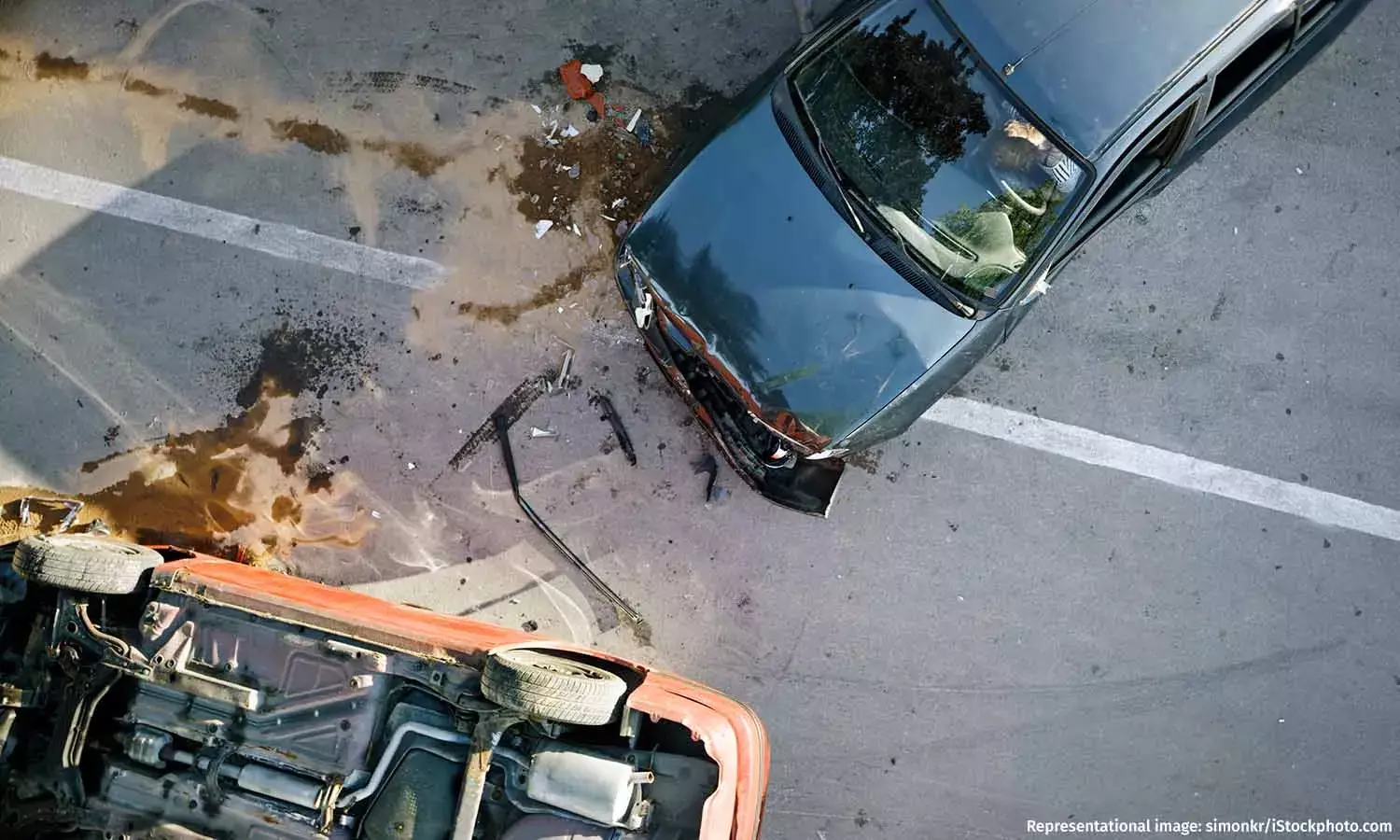
Mumbai: In September 2025, Kalidas Madhulkar Khilare’s 18-year-old son stepped out of his home in Pune to catch a bus for college. A rickshaw hit him. As he fell, the vehicle’s rear wheel ran over his leg.
Doctors inserted a metal rod to stabilise the fracture. Since then, Khilare—who works as a municipal garbage truck driver—has spent about Rs 3 lakh on treatment. His son now undergoes sonography and X-rays every 15 days to monitor the injury.
Months later, the pain persists. Doctors say the metal rod will have to be removed after a year—another surgery expected to cost roughly Rs 3 lakh. In official statistics, his son’s story is recorded as grievous injury.
Across India, the number of people surviving road crashes with serious trauma—brain injuries, amputations, spinal damage—has remained a statistic. But for many families, the crash is only the beginning of a years-long financial and physical ordeal.
Between 2019 and 2023, India’s reported road crash injuries increased 3% to 462,825 as per the Road Accidents in India report for 2023. A third of these (158,576 people) are grievous injuries—and include brain injuries, amputations and spinal damage, explains Piyush Tewari, founder and CEO of SaveLIFE Foundation.
Yet, experts say, even this estimate is likely incomplete.
What the data miss
India still relies largely on police records to measure road crash injuries. That creates a blindspot, as IndiaSpend reported in October 2021. The country does not have a nationwide trauma registry that records the types and severity of injuries victims actually suffer, Tewari explains.
“We have absolutely no clue,” he said, about how many victims suffer head injuries, spinal trauma or amputations.
Police data categorise injuries broadly as “simple” or “grievous”, but these classifications provide little insight into the medical consequences of crashes.
Many injuries also never enter the system. Victims sometimes avoid filing police complaints, or the police do not formally record crashes, Tewari explains. Data on non-fatal crash injuries in India may also be unreliable because survivors may choose not to report them to the police or hospitals, we had reported.
“If you look at the ratio of deaths to injuries, it simply doesn’t reflect reality,” Tewari said, questioning whether the current data capture the true scale of trauma.
Better reporting may be raising the numbers
The increase in the number of people suffering injuries from road accidents may reflect improvements in reporting rather than a sudden rise in crashes, Tewari points out.
In recent years, the government introduced the Electronic Detailed Accident Report (EDAR) system across police stations, which helps in standardising how road accidents are recorded. The system links crash reporting to digital databases and has improved coverage across rural and urban areas. That means officials are now documenting more crashes—and more injuries—that previously went unrecorded.
Experts say India may see injury numbers increase further before they stabilise, simply because the country is now recording cases that previously went unreported.
Serious injuries are happening on everyday roads
Two-thirds of injuries in road accidents in 2023 occurred on straight roads, while 13% occurred on curved roads. About 46% were in “open areas”, that is, “locations which normally do not have any human activities in the vicinity”.
Two-wheeler riders account for 54% of injuries. In 2023 alone, over 105,000 people were reportedly injured where riders or pillion riders were not wearing helmets.
Delivery workers are especially exposed.
“India's official road crash data sets do not capture profession-specific data or risks, such as those of gig workers, despite the rapid expansion of delivery platforms and quick-commerce segments,” according to Aastha Shreeharsh, strategy and operations fellow at Crashfree India. But, she cites research and surveys to illustrate the scale of the problem: About 50% of 431 gig riders surveyed in Mumbai reported experiencing a crash, and nearly 75% reported near-miss incidents in a study conducted in Mumbai.
Many entered the profession with limited experience on the road, sometimes holding licences for less than six months or none at all, they found. Further, untrained riders can legally use e-bikes under the speed of 25 km/h without any registration, license or helmet.
When injury becomes an economic shock
For families, the consequences extend far beyond the crash.
Earlier this year, Nirmala Sakat’s 20-year-old son, a pizza delivery rider in Pune, was on his way to a delivery in Koregaon Park when a motorcycle coming from the wrong side struck him and the rider fled.
The crash crushed his left foot. Doctors managed to reattach most of his toes, but one could not be saved.
The surgery cost about Rs 2 lakh.
For Sakat, a waste picker and single mother, arranging the money was a struggle. She borrowed Rs 50,000 from her brother and relied on savings and small loans to cover the rest.
Her son’s employer refused compensation because he had been riding with a learner’s permit.
Immediately after the crash, a passer-by took him to a private hospital. Later that night, Sakat tried to shift him to Sassoon Government Hospital but was told no beds were available. Only after a local corporator intervened was he admitted to another hospital.
Today, her son has returned to work delivering pizzas. He is saving money to buy another two-wheeler.
Survival without long-term care
Government programmes such as the national cashless treatment scheme are designed to ensure that crash victims receive immediate medical care without upfront payment.
Experts say the scheme addresses a critical problem: hospitals refusing treatment because patients cannot afford it.
But serious injuries rarely end with emergency surgery. Brain trauma, spinal injuries and crush injuries often require months or years of rehabilitation.
A national study conducted by SaveLIFE with the World Bank found that medical costs constituted 52% of the total costs of low-income households, followed by loss of productivity/loss of income, which accounted for 25% of total costs..
Only 14% of victims from low income households reported receiving any form of medical insurance or compensation.
Delays in Motor Accident Claims Tribunals, the quasi-judicial bodies that adjudicate compensation for crash victims can stretch 13 to 20 months, leaving families to manage expenses on their own, Tewari says.
For workers in the informal economy—including delivery riders, sanitation workers and daily wage labourers—injury can quickly turn into a financial crisis.
A shift in the policy debate
The Supreme Court has begun examining whether India should adopt a Right to Trauma Care framework that makes it a legal duty of the state and health system to ensure every seriously injured person reaches a properly equipped facility and receives stabilising care within the golden hour (the critical window after injury when emergency treatment is most likely to prevent death or permanent disability) — with cashless, non‑discriminatory, and time‑bound emergency services.
Over half of the 45 million deaths annually in low- and middle-income countries are from conditions that emergency care could address, a reality brought home by Tamil Nadu's experience, where a 24% drop in road accident deaths between 2017 and 2018 was directly linked to faster emergency response times and better-equipped trauma centres as IndiaSpend reported in February 2020,
Advocates argue that trauma care should be treated as part of the constitutional right to life.
Such a framework would link ambulance systems, trauma hospitals and rehabilitation services while guaranteeing treatment regardless of a patient’s ability to pay.
Months after the crash, Kalidas Khilare’s son still walks with pain. The metal rod in his leg will remain there for another year.
IndiaSpend reached out to the road transport and highways ministry for comment. We will update this story when we receive a response.
We welcome feedback. Please write to respond@indiaspend.org. We reserve the right to edit responses for language and grammar.