
Changing Climate Is Impacting India’s Nutrition Security
Overall, India is producing record levels of paddy and wheat, but marginal production of other crops affects nutrient intake
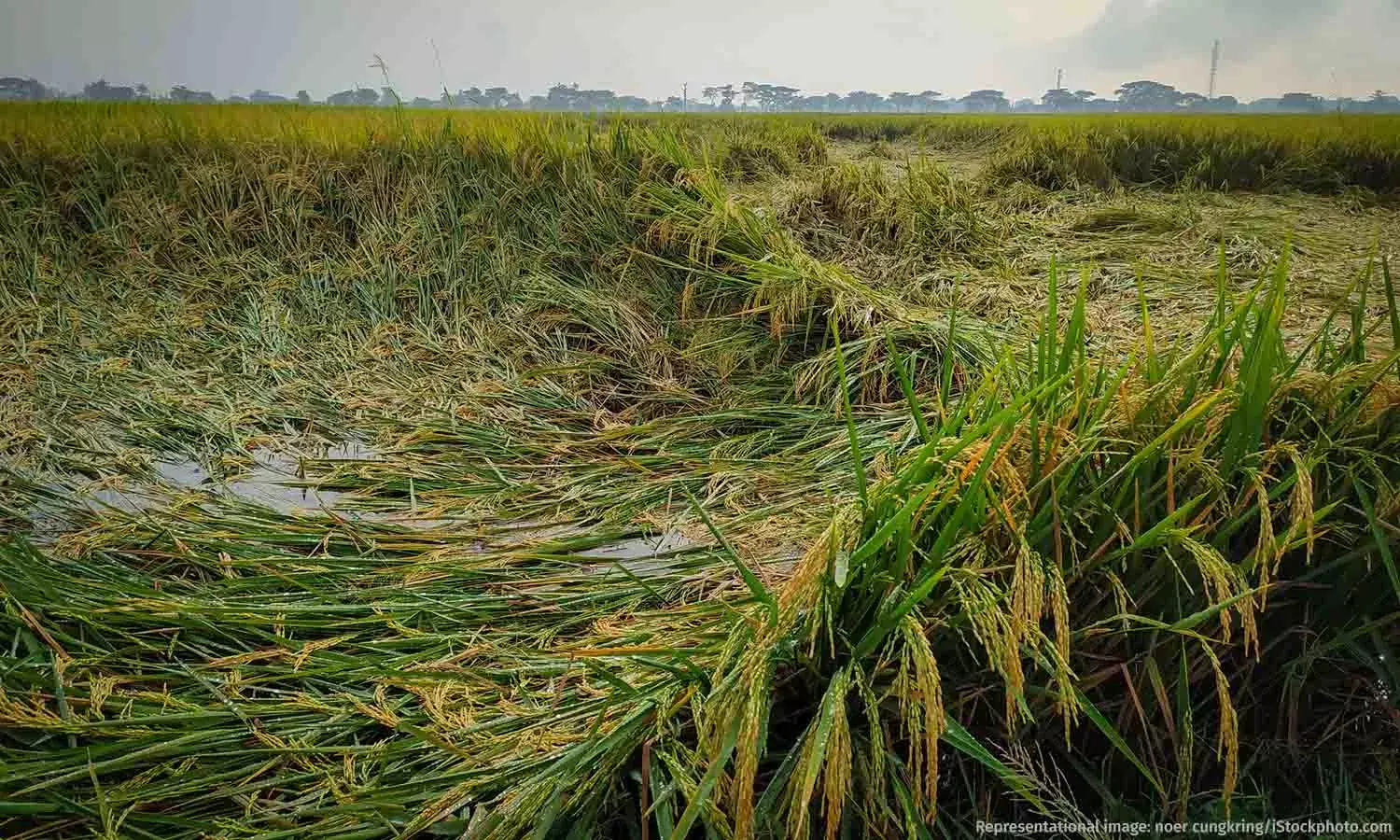
Mount Abu, Rajasthan: Rice and wheat, protected by extensive irrigation and relatively resilient to climate variability, form the backbone of India’s food security, preventing millions of Indians from going to bed with an empty stomach. But this is not the same as nutrition security.
A balanced diet requires more food groups such as pulses for protein, vegetables for vitamins, oilseeds for essential fats, and millets for micronutrients. And these crops are facing disruptions in yield, area under cultivation or production as a result of changing climate, studies show.
For instance, a 2023 study by the International Crops Research Institute for the Semi-Arid Tropics (ICRISAT) and the World Food Programme found that 65-87% of districts growing maize, pigeon pea, chickpea, sorghum and sesame show high production instability due to climate variability.
This has a cascading effect: Even as the government ensures access to rice and wheat, the cost of nutritious food is rising, particularly in remote and climate-vulnerable regions.
Food Price Watch, IndiaSpend’s realtime dashboard, aggregates food prices from various groups across the country to estimate how much an individual or family would need to spend to consume the most affordable balanced diet. A family of four in Mizoram needs Rs 9,421 monthly for a balanced diet—57% more than Madhya Pradesh's Rs 6,002. The Andaman and Nicobar Islands require Rs 9,546. A single nutritious meal costs Rs 28.85 on average—more than 1 GB of mobile internet (Rs 22).
Remote and climate-vulnerable states face higher food costs due to disrupted supply chains and extreme weather, as IndiaSpend reported earlier this month. When floods destroy crops in Punjab or heat waves reduce vegetable yields in Himachal Pradesh, prices spike in distant markets.
A single extreme weather event cannot be called climate change. It takes successive extreme weather events to label such occurrences as climate change. And consequently, it takes successive crop failures to those events to attribute the ensuing losses to climate change. Such situations are playing out across India.
Extremely heavy rainfall in Punjab towards the end of August and beginning of September 2025 flooded more than 145,000 hectare of cultivated land, causing losses worth Rs 2,287.68 crore of the standing crops—paddy, maize, sugarcane and cotton.
“Excessive rain in Punjab and Maharashtra this monsoon, and the cyclonic impact on Tamil Nadu, Puducherry and Andhra Pradesh in November 2025 may all be attributed to climate change,” Shalander Kumar, a scientist and global theme leader for socioeconomics, inclusion and impact for the Transforming Food Systems programme at ICRISAT, told IndiaSpend.
The biggest risks
Extreme weather events are becoming more frequent and erratic. They can not only reduce production, the planted area and yield of several crops, resulting in losses to farmers’ livelihoods, but also adversely impact food quality, and income and employment across the entire agricultural value chain.
Four in five of India’s small and marginal farmers depend on rainfall. State of Marginal Farmers of India 2024, a survey of 6,615 marginal farmers by the Forum of Enterprises for Equitable Development (FEED), showed that half of paddy farmers and two in every five wheat farmers lost more than half of their crop to extreme weather events consistently every year over the five preceding years. Between 45% and 65% farmers also suffered similar losses in other crops they were growing due to extreme weather.
Calling these numbers “alarming”, Suryamani Roul, managing trustee of FEED, said there can be no doubt that climate change is upon us, and is adversely impacting Indian farmers.
The 2023 study by ICRISAT and the World Food Programme overlaid crop production, yield and acreage data from 1998 to 2017, from 463 districts across 29 states, with data representing 26 indicators of climate from 1990 to 2020, to determine the food grains, pulses and oil seed crops most sensitive to climate variability.
Categorising the impact of climate variability as low, medium, or high, they found high production instability in roughly more than half of the districts substantially growing every single crop other than wheat and rice. Districts in north western India, especially in Rajasthan, Haryana, and Punjab showed high climate variability.
Rice and wheat were among the most stable crops in the face of climate variability. Kumar attributes this to rice being mostly grown in irrigated lowlands or lowlands receiving higher rainfall, with a smaller area of rice under unirrigated uplands.
The cultivation of wheat too, is mostly backed by assured irrigation systems, which guarantee steady crop growth and productivity.
Just over half of India’s gross cropped area is irrigated, with the rest being dependent on the annual monsoon.
All the oilseed crops grown in the country exhibited high instability in terms of area, production and yield. Considering that India has a huge deficit in edible oil production as compared to its domestic demand and aspires to reduce its oil import bill, this is a matter of concern, said Kumar.
Maize was the most vulnerable crop, a fact Kumar attributed to “the huge expansion in its cultivated area in recent decades, even in rainfed regions which are vulnerable to recurring droughts, which were earlier covered by supposedly more resilient crops such as sorghum, pigeon pea, cotton, etc.”
Cropped area and production for crops considered climate-resilient such as sorghum (both rabi and kharif), pearl millet, chickpea, pigeon pea and sesame were found to be highly unstable due to climatic variability.
Kumar explained this is because these crops are typically cultivated in marginal lands, climatically more vulnerable rainfed regions where other crops aren’t likely to sustain. Essentially, they are already under a disadvantage. As the climatic variability and frequency of extreme events increases, he said “these crops are likely to be further impacted as sufficient adaptation strategies aren’t being implemented.”
Relying on aggregate outcomes can be misleading
So far, the adverse effects of climate change-induced extreme events on agriculture have largely been negated at the country-level, mainly due to increased adoption of technologies and access to infrastructure, in the context of the availability of food. With the frequency of extreme events likely to increase in future, Kumar said, “India cannot ignore their potential adverse impact on food security and rural livelihoods.”
India’s paddy output in 2024-25 hit a record level, despite the crop losses in Punjab. Himanshu Rattan, food, agriculture & allied services lead in KPMG’s government & public services division attributed this to production gains emanating from favourable weather and the adoption of technology in states such as West Bengal, Uttar Pradesh and Andhra Pradesh.
Such highs are dangerous. They can lead to a sense of complacency in the context of considering worse case scenarios, like the catastrophic loss of food crops to climate change-induced extreme weather events, whether in their immediate aftermath or as a long-term consequence.
In Punjab, intense efforts by farmers’ groups, not-for-profits and religious groups to clear sand deposits on affected agricultural land, and desilt and level the land, aimed at the timely sowing of wheat in the ‘rabi’ season.
Tarn Taran district saw the highest excess rainfall this monsoon, 139% of the long term average, compared to the state’s 41% excess. Some flooding near the Harike barrage in the district was attributed to the failure of embankments when 330,000 cusecs of water were released to feeder canals leading into Rajasthan.
About 90% of that affected area has been readied and sown with assistance from volunteers from the Sampardai Kaw Sewa Sarhali Sahib. However, about 10% of the agricultural land, which had been submerged by the swollen rivers, will take years to recover, according to Gurdeep Singh, a representative of the Sampardai Kaw Sewa Sarhali Sahib.
If significant tracts of agricultural land across India were to suffer extensive damage, the drop in cultivable land in the next sowing season could impact the availability of food.
Over in flood-hit areas of Maharashtra, farmers rue the erosion of their top soil as much as their crop.
While “the government is financially supporting farmers who have lost their crops and top soil, and extending that support to help them recover soil deposited in water bodies in the area, it will take years to restore the lost fertile top soil,” Trimbak Gopalrao Akolkar, the former sarpanch of Karanji village in Ahilyanagar district, told IndiaSpend. “Farmers will use what is available in water bodies and natural fertilisers to gradually build back the fertility in soil. It takes decades to create fertile top soil.”
This phenomenon has been well documented. For instance, after a tropical cyclone wiped out a quarter of Philippines’ banana crop in 2012, it took about five years for the banana industry to fully recover.
The impact on health
Agricultural districts most vulnerable to climate change are often in arid or semi-arid regions, coastal zones and rainfed areas. Protecting these from crop losses would not only secure food supply and livelihoods but also ensure better health.
A new study spanning 575 rural districts of India set 15 indicators of capital endowment—natural, human, social, physical and financial—used to estimate a district’s exposure, sensitivity and adaptive capacity to climate vulnerability, against select health indicators from the National Family Health Survey 2019-21.
Districts considered to be most vulnerable to climate change consistently underperformed on five health parameters studied—stunting, wasting, being underweight, having non-institutional deliveries and facing problems in accessing healthcare. For instance, children were 1.25 times more likely to be underweight in highly vulnerable districts.
Purnamita Dasgupta, chair professor and head, Environmental and Resource Economics Unit, Institute of Economic Growth, said “the findings underscore the need to consider the adverse impacts of climate change on health outcomes, apart from the socio-economic and access-related factors that have conventionally been considered as relevant in influencing these outcomes.”
Considering that crops are most vulnerable in districts where agriculture is rainfed, this study shows that food insecurity is already adversely impacting India’s poorest people.
Towards nutrition security
India’s National Food Security Act secures access to food by entitling every poor individual to 5 kg of food grains every month, and the poorest households to 35 kg of food grains. At present, these two categories of beneficiaries make up about 75% of the rural population and up to 50% of the urban population. Overall, approximately 60% of Indians are covered by this food security programme.
A key drawback of this entitlement is that grain alone cannot secure a person’s nutritional needs, even if the grain is fortified. Micronutrients can only be obtained only through a diversified diet. So in a sense, calling the distribution of grain ‘food security’ is misleading.
“Malnutrition is the composite deficiency of many nutrients,” explained Anura Kurpad, St John’s Medical College, Bengaluru. “Supplying just a few to deal with specific deficiencies such as iron does little to alleviate the general problem.”
“In theory, only about a third of the recommended daily allowance of any particular nutrient should be met through the daily intake of foods that are fortified as per current norms. This is also relevant when the said food is eaten in reasonable amounts, which is limiting in itself,” continued Kurpad. “You can overeat fortified rice or other cereals for example, but not salt.”
Instead of the existing public distribution system, Kurpad would endorse one that covers only those who are truly in need, but comprehensively, to ensure real food and nutritional security and deliver better health outcomes. “Using the available funds to increase diversity—in the form of pulses, fruits and vegetables, and even milk or eggs, would help alleviate malnutrition,” he said.
Adaptation strategies vital to secure agrifood systems
Without adaptation, climate change is likely to reduce rainfed rice yields by 20% in 2050. Irrigated rice yields are projected to fall by 3.5% in the same time period, wheat yields by 19.3%, and kharif maize yields by 18-23%.
The India Meteorological Department issues medium-range (up to 3-7 days in advance) weather advisories at the district and block levels under the Gramin Krishi Mausam Sewa scheme. But Roul advocated customised advisories and adaptation awareness campaigns. These, he said, will help farmers adopt resilience practices, regenerative/natural farming practices and biodiversity integration in specific landscapes.
While panchayat-level forecasting has been introduced, Roul said it isn’t sufficiently granular: Farmers need more information about the potential of drought, cyclones, heat waves and excessive rainfall to make informed decisions. Information must also be disseminated to farmers.
Customised advisories backed by continuous monitoring and knowledge sharing, Roul said, “are essential because farmers are struggling to maintain crop productivity and their income cycle in the face of unpredictable weather conditions—erratic rain, wind, cyclones and also the depleting water table.”
“During visits to farmers, I’ve witnessed their helplessness first-hand,” Roul continued. “Farmers in a village in the vicinity of Bhubaneswar recently told me that they had opted against investing in protected greenhouses to grow vegetables because they feared losing their crop to the frequent cyclones that were impacting the area, unlike in the past.”
When farmers feel discouraged by higher risk to make bigger investments in agriculture, they look for other complementary livelihood strategies, Kumar said. “While this may protect their incomes, it neither makes their crops resilient nor assures the country of achieving crop production potential.”
India’s unsustainable use of natural resources such as ground water and degrading soil health accentuates climate uncertainty outcomes, Kumar pointed out, underscoring the urgent need for investment in climate-resilient technologies and resilient agrifood systems. Regular agricultural planning, policies and actions for vulnerable rainfed regions (dry lands) conventionally growing highly nutritious crops should integrate a climate lens, he said.
This will entail harnessing resources and synergies at scale by supporting supply and value chains. “Access to information, insurance, extension services and infrastructure remain critical,” he added.
“Our wheat-rice cropping system continues to strain groundwater and remains vulnerable to heavy monsoons,” said Rattan. “We urgently need sustainable agriculture practices and crop diversification to ensure India’s food security and safeguard rural livelihoods. Remedial measures to counter climate risks include developing climate-resilient crop varieties.”
Working around challenges key to adaptation success
Work on developing climate-resistant varieties of crops is underway, and more than 2,000 different varieties have been released to farmers in the last few years, according to Soora Naresh Kumar, head, principal scientist, Environment Science, ICAR-Indian Agricultural Research Institute.
For instance, Swarna-Sub1 is a new variety of rice that can tolerate being submerged for 14-17 days as against the Swarna variety that couldn’t tolerate more than a few days of flooding.
But keeping up with the pace of climate change is challenging because of the rapid emergence and evolution of new abiotic and biotic stressors, explains Naresh Kumar.
“We’re now developing pest, drought, heat and flood-resistant varieties, short season varieties, faster than ever with speed breeding, which means breeding in controlled environments so that the development of new varieties can be cut short from 10 years to three years.”
With the new varieties being more expensive than prevailing ones, awareness is also vital for their greater uptake.
“We need to expand the seed value chain to cater to farmers across India’s 650,000 villages, which is a huge awareness effort in itself,” said Naresh Kumar. “In all this, there is also a need to protect traditional crop varieties for their resistant traits and cultural value so such cultivation must also continue.”
Implementation challenges also need attention.
“Aiding natural resource management, covering nutrient management, water management, landscaping and so on, is necessary to help farmers manage their crops,” added Naresh Kumar.
We welcome feedback. Please write to respond@indiaspend.org. We reserve the right to edit responses for language and grammar.